The latest news, trends, analysis, interviews and podcasts from the global food and beverage industry



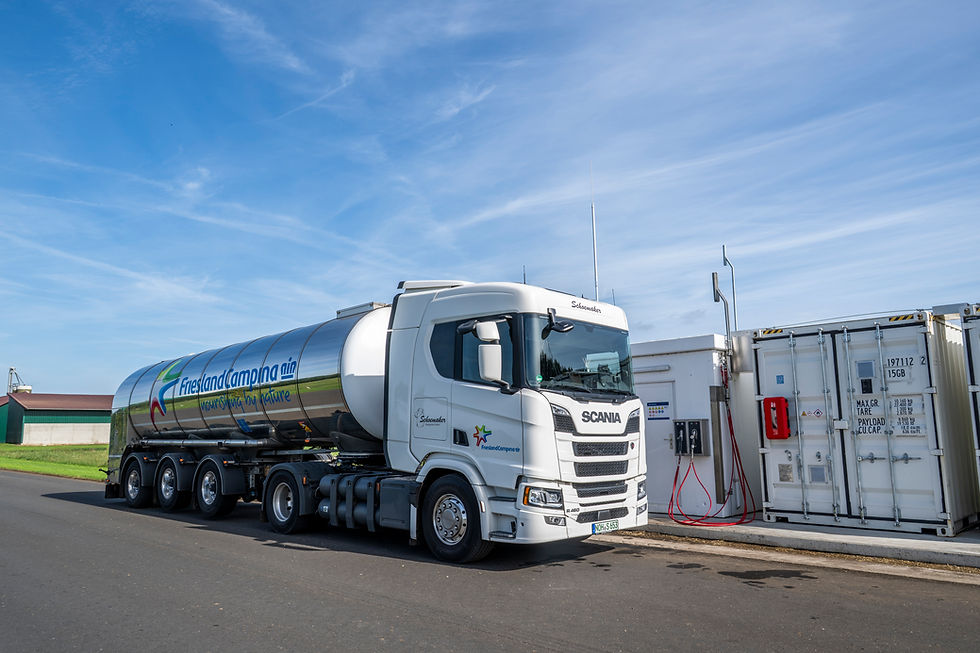
FrieslandCampina has formed an alliance with seven transport companies in the Netherlands and Germany to accelerate the shift towards lower-emission milk transport across the region.
The dairy cooperative said the partnership will focus on replacing conventional trucks with vehicles powered by biomethane, or bio-CNG, as fleets are renewed. Around half of the transport fleet covered by the collaboration is expected to transition to bio-CNG in the coming years.
The initiative will support milk transport operations in the Netherlands, Belgium and Germany, with the partners also working to expand refuelling and charging infrastructure.
FrieslandCampina said improved infrastructure will be critical to increasing the use of renewable fuels and other low-emission vehicles throughout its logistics network.
Mirco Shoemaker, director of Shoemaker Transporte, said: “Biomethane is currently one of the most practical and scalable solutions for substantially reducing CO₂ emissions from milk transport in the short term. At the same time, switching to biomethane requires significant investment in both vehicles and refuelling infrastructure.”
Schoemaker added that collaboration between logistics operators and other players across the supply chain would be essential to scaling the technology.
A key feature of the initiative is the use of the biomethane produced from manure through anaerobic digestion. The approach creates a link between dairy farming and transport by converting an agricultural residual stream into renewable fuel for milk collection vehicles.
In Germany, FrieslandCampina member dairy farm Barver Landmilch in Lower Saxony is already operating such a system. The farm produces biomethane using its own manure digester and has on-site refuelling facilities, allowing milk trucks collecting from farms in the surrounding area to refuel with locally produced bio-CNG.
Marcel Ebbelaar, Manager Milk Logistics & Transport at FrieslandCampina, said: “The strength of bio-CNG is that it creates a direct link between our member dairy farmers and our logistics operations. “In future, milk can be transported using fuel that is partly produced by our own member dairy farms. This enables us to reduce transport emissions while also making the value chain more circular.”
The partnership highlights the growing focus among food and beverage companies on addressing emissions beyond manufacturing facilities, particularly in transport and distribution.

Related posts


