The latest news, trends, analysis, interviews and podcasts from the global food and beverage industry




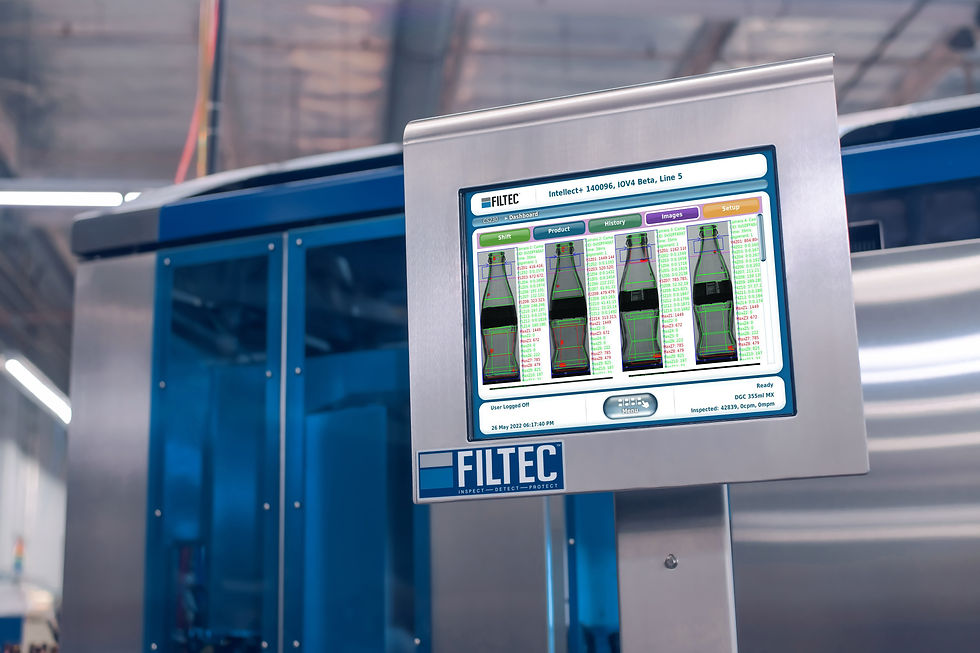
Vision-based AI inspection systems are moving onto food manufacturing lines faster than the protocols to validate them. Santoshi Muriki, a food safety and quality assurance manager overseeing supplier compliance across a national wholesale grocery network, argues that if AI is doing the job of a critical control point, it needs to be validated like one.
The fact that metal detectors, X-rays and checkweighers are on critical control points today, for example, is because we spent years proving their reliability with repeated validated challenges and under regulatory scrutiny, before we would trust them to tell whether something passed or failed. Now that cameras – the vision systems connected with a machine learning brain that detect contaminants, packaging errors and deformed products on the fly – are taking a somewhat similar, or even faster, route onto a few manufacturing lines, most of us are missing a crucial part of the conversation that all other CCP technologies had to address: namely, with the verifiable data a regulator wants to see, how do we know they will do exactly what they are supposed to do?
Why 'it worked in the demo' isn't validation
A sales demo of a piece of equipment cannot substitute for a validation study. In a demo, we use good lighting, a restricted set of fault samples and a line that runs at a constant speed. Production is none of those. In production, you see a variable product orientation. In production, the line speed may fluctuate during product changeover. The container reflects light at different angles depending on humidity and the static on the package. Even the light itself can drift during a shift as sensor covers accumulate dust, and even as conditions in the plant shift seasonally.
A validated CCP technology must demonstrably perform across the range of actual operating conditions for the equipment – not the range at which it successfully performed during a sales pitch. For a metal detector, this is to challenge test against certified test pieces for every product size and density. The equivalent for AI vision is not yet universally defined but has the same requirements. The validated vision technology requires a library of defect types and defect severities and is challenged multiple times across a range of actual line speeds, actual light levels, and actual product presentations, resulting in demonstrable detection and false-reject rates across the various specified conditions. It cannot be a single number taken from a training database.
The black box problem
The conventional CCP technologies are predominantly deterministic: your metal detector either detects a perturbation in its electromagnetic field above a fixed, provable threshold, or it doesn’t. The threshold can be verified, logged and audited to a known value. A machine learning system’s boundary, on the other hand, can morph in ways that can be almost impossible to characterise completely, let alone communicate to auditors row by row to verify operation.
This leads to a real-world validation challenge beyond a messaging one – when your AI system flags – or doesn’t flag – a fault, a food safety team needs to be able to justify their position based on documented performance of that model against test cases with established defect status, a proposition complicated by a vendor’s disinclination to disclose the 'black box' technology, and the customer’s frequent inability to inspect that box’s inner workings.
Model drift is a new category of deviation
Traditional inspection equipment fails in familiar, physical ways: a dirty sensor, an out-of-calibration trigger point, a component failure captured on a preventive maintenance log. An AI model fails more invisibly. If the product simply changes its look to some minor degree with the introduction of a new ingredient from a supplier, a seasonal redesign to the packaging, or with the different line conditions from a new co-packer, a model trained on the prior look can just slowly grow worse, unseen because it never threw a mechanical failure code.
A programme must exist within companies that deploy AI vision to monitor the kind of changes to which the model is blind. Periodic re-calibration against a representative defect sample, a trigger set for re-training when the system's performance indicators begin to show a slide toward poorer results, and a record of changes anytime the model code itself is changed should provide the same kind of ongoing assurance that is expected from preventive maintenance schedules for physical machinery. Otherwise, a facility can achieve favourable results on its validation and be running an ineffective inspection system in two or three quarters.
Building a validation framework, not waiting for one
So far, there isn’t a widely adopted, regulatory-specific method, or any that have been officially published. Food producers don’t typically have the luxury of waiting to see if an AI-specific one ever will be developed. Meanwhile, the methodology that is already in place for the validation of any automated CCP technology already applies: validation using GFSI-recognised equipment validation principles, supported challenge tests, acceptance criteria and scheduled re-verification work the same, regardless of whether the equipment operates using a decision tree or machine learning algorithm.
In practical terms, it translates to taking an AI-driven vision system and following the established procedures for putting any new piece of CCP equipment onto a food production line: conduct a validation study before system launch and gain internal sign-off; ensure acceptance criteria are established that can actually be tested and measured; ensure that a post-implementation schedule of monitoring and re-verification procedures are clearly established; and identify the person or people responsible for taking action when process monitoring data signals a significant change.

The stakes of getting this right
AI-driven inspection could indeed boost food safety, and the motivation on manufacturers' side is sound. However, a system change without the validation diligence you automatically apply to other CCP control systems is an unattended security hole dressed up in the clothes of advancement. It will be food safety leaders not willing to compromise who gain the most value from this technology.