The latest news, trends, analysis, interviews and podcasts from the global food and beverage industry



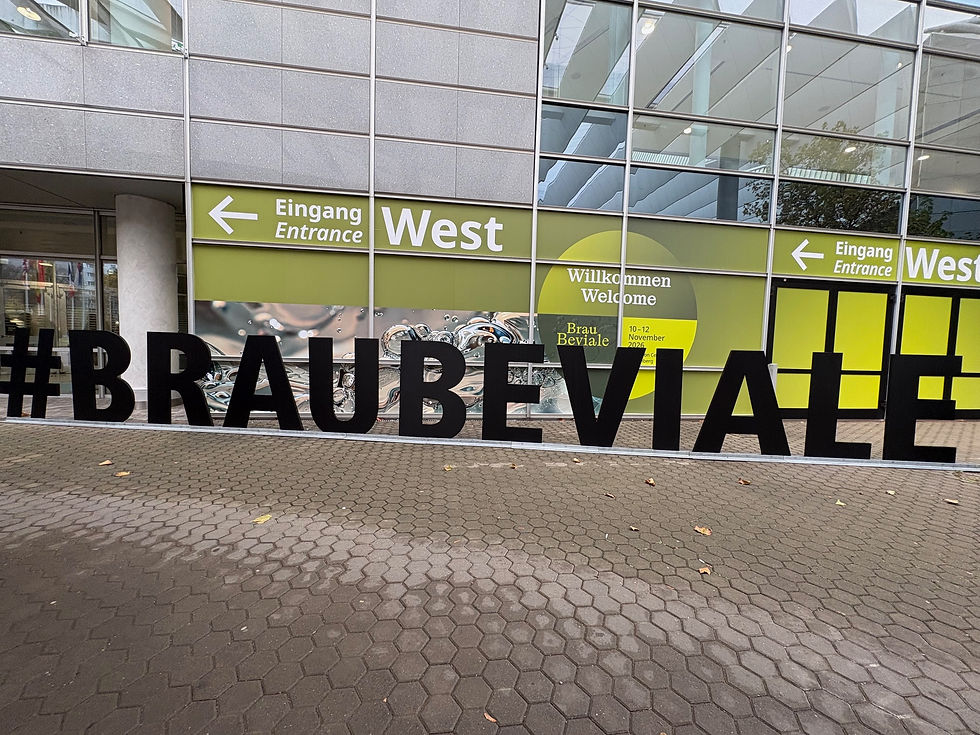
From 10-12 November 2026, BrauBeviale returned to the Nuremberg Exhibition Centre in Germany, bringing together more than 800 exhibitors from 38 countries to explore the latest solutions, ingredients and technologies across the beverage production chain.
Under the theme 'Time for Opportunities,' this year's event focused on the possibilities ahead for the industry, with exhibitors demonstrating how innovation, sustainability and changing consumer expectations are creating new opportunities for beverage producers.
Alongside a packed exhibition floor, visitors could attend an extensive programme of talks, workshops and presentations, as well as celebrate the winners of FoodBev Media's annual World Beverage Innovation Awards in a special ceremony at the end of day one.
Sustainability, wellness and innovation
A recurring message throughout the exhibition was that sustainability must consider not only the planet but also the people consuming the products. With growing interest in healthier lifestyles, manufacturers are responding to demand for reduced-sugar and lower-alcohol beverages, while retaining the familiar flavours consumers know and enjoy.
Exhibitors presented technologies designed to improve operational efficiency, reduce waste and support more sustainable production. Solutions ranged from wastewater reduction to equipment designed to minimise downtime and extend product life.
Among the highlights was Figura, one of this year's World Beverage Innovation Awards winners. The company showcased its 24-hour microbial detection technology, available in both portable and fixed versions, which can identify microbial contamination in alcoholic and non-alcoholic beverages.
The technology is already being used by Greene King across its UK pubs. Previously, spoilage detection could take up to a week, making the faster testing process particularly valuable as the low- and no-alcohol category continues to grow. These products can present additional challenges during storage, including the risk of refermentation, making effective monitoring increasingly important for producers and distributors.
Elsewhere, KHS demonstrated how artificial intelligence is being integrated into packaging development through its AI-powered bottle design programme. The technology reduces the time required to create new packaging designs, helping producers respond more quickly to emerging trends and changing market demands. The company also showcased its latest lightweight aluminium bottles and next-generation PET packaging.
Equipment manufacturers also highlighted the role of efficiency in reducing environmental impact. Longer-life pumps and valves, designed to minimise maintenance requirements and downtime, featured across the exhibition. AF Compressors was among the companies presenting solutions in this area, while Krones demonstrated a comprehensive portfolio spanning packaging, production and automation.

Reformulation takes centre stage
With a sugar tax under discussion in Germany, reformulation was another prominent theme throughout the exhibition. A number of companies presented new reduced-sugar and sugar-free formulations, alongside natural sweetener alternatives designed to help manufacturers respond to changing regulations and consumer expectations.
The continuing growth of wellness-focused products and declining alcohol consumption are also influencing innovation, with functional beverages and alcohol alternatives gaining further attention.
Muntons showcased its reduced-sugar applications, while Distiller highlighted the use of natural ingredients, particularly in energy drinks. The emphasis on simpler formulations and avoiding unnecessarily complicated ingredient lists was evident across the exhibition.
Austria Juice offered visitors a taste of how familiar beverage categories can be reimagined for changing social occasions. Its range included a malt-based lemonade, combining the refreshing characteristics of a soft drink with flavour notes more commonly associated with beer and other alcoholic beverages.
The company's solutions also demonstrated how breweries can diversify beyond traditional beer production, using existing brewing and fermentation expertise to develop functional beverages that combine familiar flavours with additional health benefits.
Malt lemonade was not the only alternative soft drink attracting attention. Kalsec was showcasing its natural hop extracts and its interpretation of hop water, a category that has been gaining traction in the US.
The extracts offer manufacturers an opportunity to introduce hop-forward beverages without requiring a brewery or distillery, potentially reducing equipment requirements, production space and waste. Kalsec also contributed to the event's programme of talks, exploring the growing hop water category and its potential to offer consumers familiar beer-inspired flavours without the effects of alcohol.
Another notable development in the ingredients hall came from Novonesis, which presented its latest concepts under the banner 'Beyond Beer'. These included alcohol-free beer concepts that do not require dealcoholisation, alongside fermented functional canned teas and probiotic kombucha.
The concepts reflect the continued expansion of wellness-led beverages, with manufacturers looking beyond traditional soft drinks and beer to explore new ingredients, fermentation processes and functional benefits.

Sharing expertise across the beverage industry
Aligning with the event's theme, BrauBeviale offered a comprehensive programme of industry discussions across its main stage and the Focus Corner workshop area.
Sustainability was a central topic, with sessions examining challenges and opportunities throughout the supply chain, alongside discussions on reformulation, technological developments and the integration of artificial intelligence into beverage production.
During the event, I was given the exciting opportunity to host a session exploring the proposed sugar tax in Germany, an increasingly prominent topic of debate for the country's beverage industry. Joined by Gintė Levisauskaitė from Lithuania's beverage association, the discussion considered how German producers could prepare for potential changes and what lessons could be learned from the implementation of similar taxes elsewhere in Europe.
Across the three days, keynotes, workshops and panel discussions examined how the industry can respond to global climate challenges, develop products that meet evolving consumer expectations and remain competitive in an increasingly complex marketplace.
The programme provided an opportunity for industry professionals to share experiences, consider practical solutions and explore how emerging technologies and changing consumer behaviours could shape the next generation of beverage production.

Recognising innovation
The first day of BrauBeviale concluded with FoodBev Media's World Beverage Innovation Awards. Held on 10 November on the Main Stage in Hall 9, the ceremony celebrated the companies and individuals behind some of the industry's most exciting developments.
With entries from around the world, the awards recognised innovation across a broad range of categories, from Best Sparkling Drink to Best Technology Innovation. The results reflected the breadth of expertise involved in bringing new ideas to market, spanning product development, ingredients, packaging, production technology, sustainability and wider commercial initiatives.
Representing 29 countries, the 2026 awards recognised 25 winning entries, 48 finalists and 72 commended submissions.
The full list of 2026 World Beverage Innovation Awards winners can be found here.

Over the course of the exhibition, the FoodBev Media team had the pleasure of meeting with companies and industry professionals from across the global beverage sector. The innovations on display highlighted an industry continuing to adapt, with sustainability, wellness, efficiency and consumer-led product development shaping its direction.
We would like to thank everyone who welcomed us to their stands, shared their latest developments and took the time to demonstrate their innovations. Congratulations also to all those who entered this year's World Beverage Innovation Awards.
Reflecting on the event, Markus Kosak, executive director of Yontex, organiser of BrauBeviale, said: "Our visitors come to BrauBeviale to learn about technical modifications, raw materials and the resulting opportunities. It's about the state of the art as well as starting points for implementation in their own operations."
BrauBeviale will return to Nuremberg from 9-11 November 2027, while its sister event, Drinktec, is scheduled to return in 2028.