The latest news, trends, analysis, interviews and podcasts from the global food and beverage industry


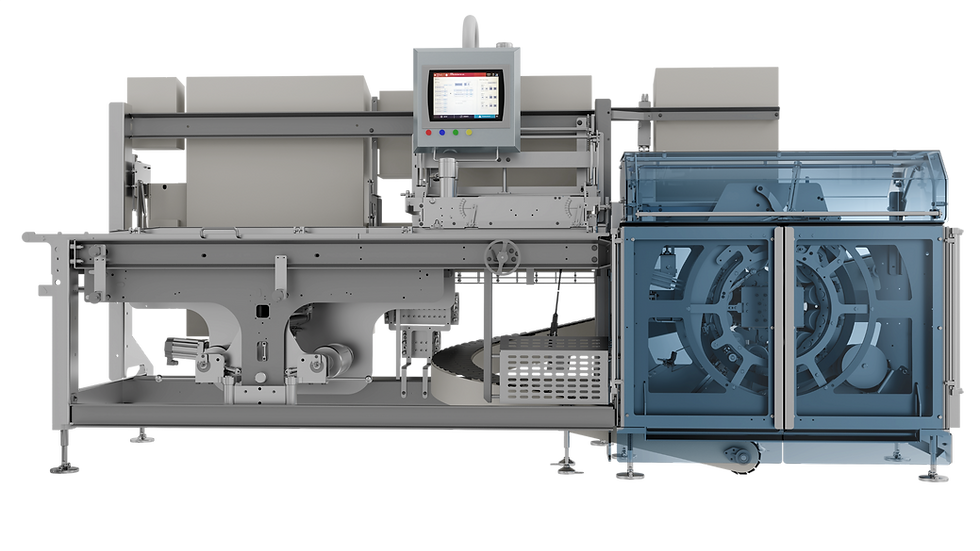
GEA has unveiled the PowerPak 5000, a new thermoforming packaging machine for medium-sized food producers.
Highlighted at the Interpack 2026 trade show earlier this month, the technology is aimed at manufacturers that require several different pack sizes, reliable daily operation and scalable automation in the mid-size performance range.
The system replaces former GEA thermoformer models in the mid-size segment, and is designed for processors seeking a ‘practical balance between performance, operational simplicity and long-term cost control’.
It is suitable for companies operating in competitive food markets where product variety, frequent changeovers and pricing pressure require packaging equipment that can maintain output and product quality without unnecessary system complexity. This includes applications in meat and seafood, dairy, bakery, ready meals and plant-based food categories.
Built on GEA’s established PowerPak series, the new solution is positioned for standard and mid-range applications rather than highly specialised peak-output scenarios.
GEA said the new model has been developed as a ‘broadly applicable’ solution for most thermoforming use cases, with emphasis on repeatable output, operational ease and predictable lifecycle costs.
It supports a broad packaging range, including MAP, vacuum, skin and steam applications. By covering these on one machine, the PowerPak 5000 aims to help processors manage multiple product categories while simplifying product and format changes.
According to GEA, it has been developed for ‘stable, everyday industrial use’ with a ‘service-friendly’ design built to simplify cleaning and maintenance, reduce downtime and support repeatable production acros shifts and product runs. Tool-free changes are designed to reduce time between batches.
The machine is equipped with GEA SmartControl, the company’s control interface for operation and monitoring. This means the operator uses a centralised human-machine interface (HMI) to manage machine settings, production status and process adjustments. This can reduce dependence on specialised labour and support more consistent performance through staff restructuring.
Additionally, GEA’s condition monitoring system GEA InsightPartner refers to the continuous observation of machine status data – such as component behaviour, temperature, or operating patterns – to identify potential issues early and support planned maintenance, rather than reactive repair.
The new InsightPartner Notification Service and its accompanying mobile app provide a fully integrated solution for delivering real-time machine notifications directly to users. Elsewhere, with GEA Changeover Assist, GEA introduces a digital solution to guide machine operators – including those without extensive machine expertise – safely and efficiently through product changeovers.
Thanks to its modular design, the solution can be expanded with advanced technologies as production requirements change, allowing processors to add functionality selectively rather than investing upfront in a fully customised system. These options include PowerHeat, PowerJet, and PowerLabel technologies.
GEA Valve Technology is designed to improve accessibility when adjusting sensitive, product-depended process parameters like vacuum and gas-flushing behaviour.
The machine frame was developed according to GEA’s Kinetic Edge Design approach. This design philosophy removes protruding edges and unnecessary structural complexity, reducing the number of components and creating a smoother machine layout.