The latest news, trends, analysis, interviews and podcasts from the global food and beverage industry


The unrelenting challenges facing food and beverage businesses have made maintaining operational and financial resilience more difficult than ever. This makes finding a route for leaders across the F&B supply chain to help mitigate or overcome these challenges even more vital. Is there a way to fund and build greater long-term resilience into their business? Julie Palmer, managing partner, Dave Mathieson, managing director of funding and insurance and Nazar Soofi, head of sustainability, from financial and real estate advisory group BTG discuss.



In the last few years, a number of challenges have left businesses across the food and beverage (F&B) supply chain feeling stale. Nonetheless, opportunities are cyclical and leaders were expecting to see chances for recovery on the horizon.
The green shoots of this were perhaps reflected in the better-than-expected GDP growth figures for February. However, it seems that as soon as the shoots began to show, they were cut by conflict in the Middle East.
Already, the impact on energy and, consequently, goods inflation can be seen in manufacturing data. UK Manufacturing PMI for March 2026 was down on the previous month, with both UK and Eurozone Manufacturing PMI releases citing increased delivery times and inflation.
Whilst more data will give a fuller picture of the impact on F&B it is clear there will be different reactions and experiences from different types of business.
A widening gap in the market
We can already see that large business groups appear to have the means to weather rising costs and continue growing, albeit at a slower rate, through innovation, investment, operational resilience and stealing market share.
The story is different for SMEs and independent companies. With less cash and assets, they often cannot afford to invest in efficiency, absorb rising employment and operational costs and diversify ranges to meet changing demands.
According to BTG’s ‘Red Flag Alert’, which has monitored the financial health of UK companies for almost two decades, there were 6,705 food and beverage companies experiencing ‘significant’ financial distress in Q4 2025, while 800 were in ‘critical’ financial distress. Within this group of companies, distilleries, breweries and bakeries were amongst the most common.
The financial distress caused by multiple challenges can also be seen in the number of liquidations across F&B companies in the UK. In 2025, there were 463 liquidations among F&B companies, up 61.9% on 2019, before the pandemic, supply chain disruption, wars and energy crises created persistently high levels of financial distress and insolvency for the sector.
It is important to note that the number of liquidations in 2025 was down by 14.1% on 2024 (perhaps another green shoot now scythed down), but numbers have not returned to the pre-pandemic levels, and don’t show signs of doing so.
A potential sign of resilience in UK F&B is the number of administrations, or businesses rescued from administration, in 2025. This figure was up 20.5% compared to 2019 and up 14.6% on 2024. This suggests businesses and investors have confidence that, with the right financial and leadership support, some distressed assets can be turned around.
For larger groups, this is where opportunities lie. Some can already see the potential in acquiring smaller distressed firms, along with their talented employees, well-equipped facilities, order book and promising IP. This keeps businesses going, customers happy and saves jobs at a time when the economy could do without more closures and job losses, but it also means the new owners can capitalise when the economy improves.
Despite this, if challenging market conditions continue, it will not just be the smaller distressed businesses being pushed towards closure. Larger businesses across the F&B supply chain may be forced to make decisions to save on costs as they, too, feel the pinch, as has been seen from a number of breweries and distilleries.
For any business, the first sign of financial distress should be the point where advice is sought. Working with advisors, leaders can evaluate businesses and find ways to streamline operations, save money, meet changing demands and diversify in order to rebuild a strong platform on which to grow.

Shedding some light on energy resilience
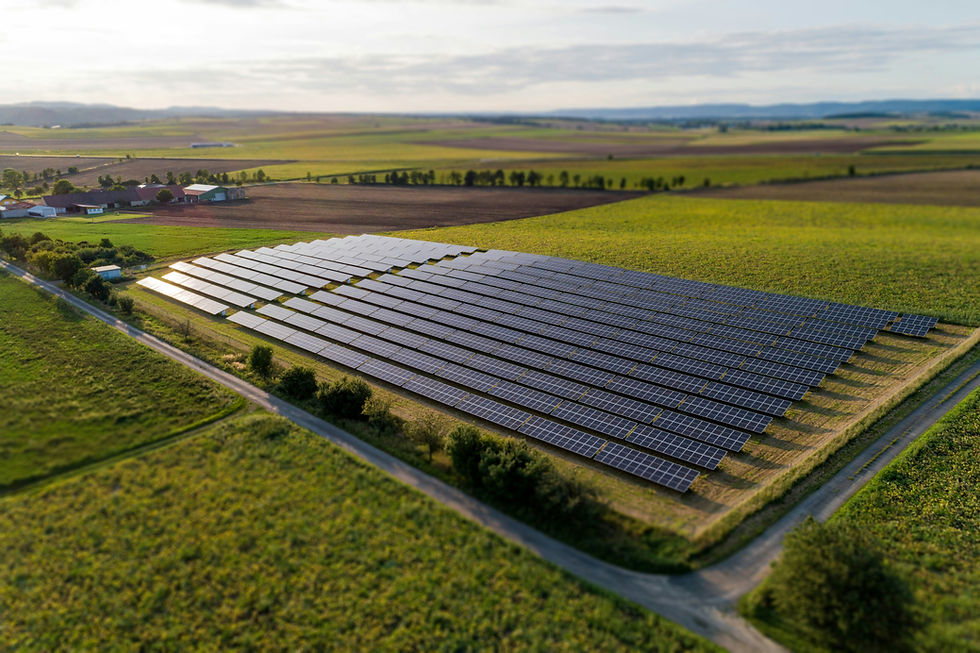
From recent months and years, it is clear that many businesses rely on a predictable or stable energy cost for the successful running of their business. This is why we are being repeatedly asked about on-site energy generation and storage by energy-intensive businesses such as F&B and manufacturing. We only expect this to increase if the conflict in the Middle East continues.
Analysis of the Renewable Energy Planning Database shows that solar has been increasingly popular since 2019, a year which saw planning permission granted for 71 solar PV projects compared to 794 in 2025. The number of solar projects being granted planning permission peaked in 2023 at 1,061; however, the size of solar projects approved has been growing each year considerably. In 2025, 7.78 GW of solar projects were approved, a rise on the previous high of 5.72GW the previous year. This was much higher than the 0.377GW approved in 2019.
An increasing trend can also be seen for battery projects, which have seen an increase year on year in planning permission granted. In 2019, there were 35 battery projects that saw planning permission approved, whereas in 2025, it reached 475, the highest in the last 5 years. Not only are there more projects being approved, but the combined level of potential generation of said projects is too. The 475 projects in 2025 exceed 35 GW, the highest level recorded.
These peaks for solar PV and battery not only highlight the easing of planning barriers for businesses and landlords, but also it could also show the growing focus on these installations as a means of providing cost-effective and reliable energy to a site.
We may see more applications submitted and granted as a result of companies seeking to control spiralling energy costs in the long term and the security of supply for operations and uptime.
An estate review can quickly uncover the opportunities for solar PV installations, particularly rooftop and car park solar installations for large F&B manufacturing sites. This includes suitable areas for battery installations to accompany them.
Specialist real estate advisors and surveyors in the sector often have the capability in the team to design, cost, and project manage installations, including analysis of current energy spend, potential savings and payback periods for the site, to provide the best solution.
With F&B companies seeing margins squeezed further than ever, the discussion then falls onto the capex barrier associated with designing and installing a system, including any disruption or downtime associated. Fortunately, as lenders have become more accustomed to financing solar projects, there is more credit available for companies to draw from. This is especially true when exploring asset-backed finance against large machinery or even buildings.
Often, these costs can be overcome or mitigated by building costs into the overall finance package, a model that many experienced sector lenders will help do. Solar installations represent a safe investment in the eyes of lenders because even with repayments on finance, solar cuts costs in the long-term for a business. In effect, the impact of implementing solar makes the business more stable at a time when energy is one of the highest and most unpredictable costs of running a business, with prices high and fluctuating.
Add to this a payback period of around five to eight years, and it can prove to be a practical commercial decision for manufacturers, with significant roof space and strong, viable, detailed business plans.

Early intervention
F&B manufacturing is resilient and there is the prospect of recovery and growth in a number of areas as food security and access to affordable food and drink continue to be central concerns for consumers and governments.
As has been seen from several larger F&B groups, early intervention to get control of costs and make decisions aimed at recovery and long-term growth is important. Engaging with advisors can not only create the plan to get a business on the right track but can also support leaders with plugging capex gaps to fund, design, and project manage implementation of efficiency measures, diversification and infrastructure needed for long term resilience.