The latest news, trends, analysis, interviews and podcasts from the global food and beverage industry


.jpg)


Magnetic levitation, also known as maglev technology, is a closely kept secret among manufacturers, which means innovation is rarely publicised. Alan Smith, regional manager at Beckhoff Automation, a company that provides automation technology to the food and beverage industry, explains the impact of maglev technology on food and beverage manufacturing.
In manufacturing, innovation sometimes arrives quietly. While robotics and digitalisation have captured the spotlight, maglev transport systems have gone under the radar since their introduction a few years ago. Rarely discussed publicly due to commercial sensitivities and non-disclosure agreements, maglev first started making headway in pharma and medical device manufacturing, where high levels of accuracy are paramount.
Now, its uptake in food and beverage manufacturing is increasing, especially among larger manufacturers, driven by end-users seeing the benefits and pushing their machine builders for the product. Maglev transport isn’t theoretical. It’s already running in production environments, handling everything from bottling to labelling, inspection to slicing. Although early adoption has naturally skewed toward global multinationals, the technology is a viable option for mid-sized manufacturers seeking to modernise their manufacturing facilities.
What is maglev?
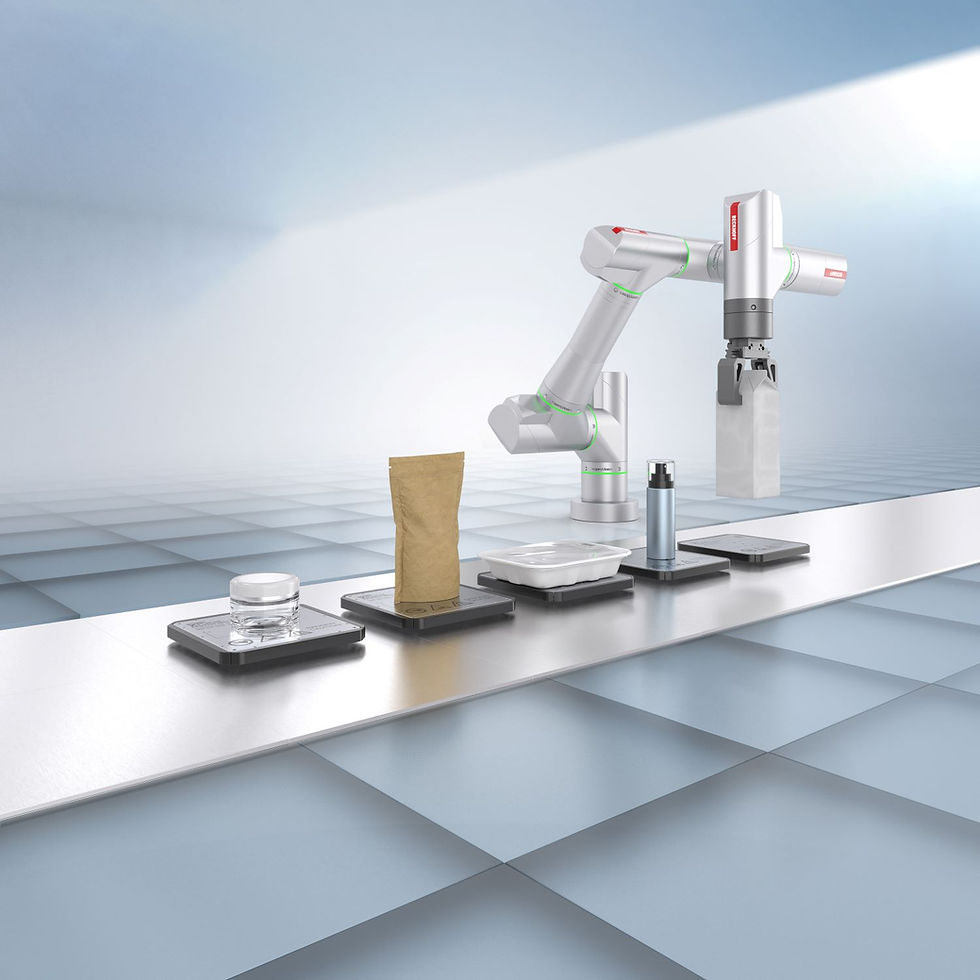
At their core, maglev transport systems use magnetic fields to levitate and move carriers – sometimes called movers or pucks – without physical contact. These carriers can glide, rotate, tilt and stop independently, controlled entirely by software. With no mechanical contact between moving parts, the transport process becomes precise, programmable and clean.
Unlike conventional conveyors or chain-driven systems, there are no belts, rollers or bearings to maintain or replace. This opens up new possibilities for product handling and line design, particularly in sectors where hygiene and product variation are key concerns.
Conventional systems are built around fixed mechanical motion: a line moves continuously or intermittently and the tooling is designed to fit specific products or sizes. Adjusting the line for new formats or different batch sizes often involves downtime, retooling and operator input.
In contrast, a maglev system can be reconfigured entirely through software. Carriers can be assigned different tasks on the fly, carrying a small bag one moment, a bulk container the next, without changing any hardware. This makes maglev systems ideal for modern manufacturing environments that prioritise flexibility and responsiveness.
Key advantages in food and beverage
Maglev systems eliminate friction and surface wear, meaning there are no particulates or off-gassing to manage. With stainless steel versions available, the movers and tracks can be cleaned to food-grade standards, matching the hygiene protocols already in place across the industry.
Although the CapEx might be higher initially, one of the interesting things about maglev is that it can take costs out of other parts of the machine. Imagine, for example, you are inspecting a bottle for defects. Traditionally, you would require multiple cameras to provide a 360-degree inspection and then a big processor to stitch those images together. As the movers on a maglev system can rotate, you’ve just quartered the cost of your inspection station. Now apply the same logic to labelling and other stations, and it’s easy to see where the cost savings can stack up very quickly.
A particularly important benefit for mid-sized manufacturers is the ability to repurpose the same hardware for different applications, another area where cost savings can provide a good ROI. A system initially deployed for one product line can be reprogrammed for another without major mechanical changes, reducing the risk of sunk costs in rapidly changing markets.
In terms of energy efficiency, the technology is also superior to traditional transport systems. Only the active segments beneath each moving carrier consume power. This offers a significant energy advantage compared to traditional conveyors, which often run entire lines regardless of whether they are fully loaded.
A single maglev system can also handle products of different sizes, weights and configurations simultaneously. For example, a line can process lunch packs, retail trays and bulk catering packs in parallel without requiring separate machines. Maglev carriers can remain with the product from start to finish, reducing the need for manual or robotic transfers between machines. This helps preserve product traceability and reduces the risk of damage or contamination.

Barriers to uptake
Given the benefits, you might be wondering why uptake is not more widespread. Despite these advantages, maglev systems remain relatively uncommon. The reasons, I would argue, are more cultural than technical.
Upfront capital costs are higher than for traditional transport methods, which may deter smaller firms. There is also a natural caution around adopting unfamiliar technology, particularly one that seems, at first glance, to defy intuition. Levitating products still feel futuristic to many end-users and machine builders, even though the technology is robust and already in use at scale.
Adding to the caution is the lack of visibility. Most systems in use are part of confidential projects or sensitive production lines, so public references are scarce. This has slowed broader recognition, even as the technology quietly proves itself behind the scenes.

A technology ready for broader adoption
While early adopters include some of the largest global food and beverage brands, maglev is no longer the preserve of high-end R&D or pharma manufacturing. It is increasingly being considered for mainstream applications, especially where hygiene, adaptability and product variety are business-critical.
If you run a Google search for maglev systems in manufacturing, references are scarce. Yet a quiet revolution is underway. As awareness grows and technical familiarity increases, maglev transport is likely to become a core component of the next-generation factory floor. In a sector where product lines are changing faster than ever, where traceability is under the microscope and where margins depend on operational efficiency, magnetic levitation offers something rare: a genuine step change in how goods move through production.


Related posts