The latest news, trends, analysis, interviews and podcasts from the global food and beverage industry



.jpg)

Dairy research in Tasmania has been strengthened following the installation of new infrastructure at the Tasmanian Institute of Agriculture’s (TIA) Dairy Research Facility, enabling larger-scale trials aimed at reducing methane emissions without compromising farm productivity.
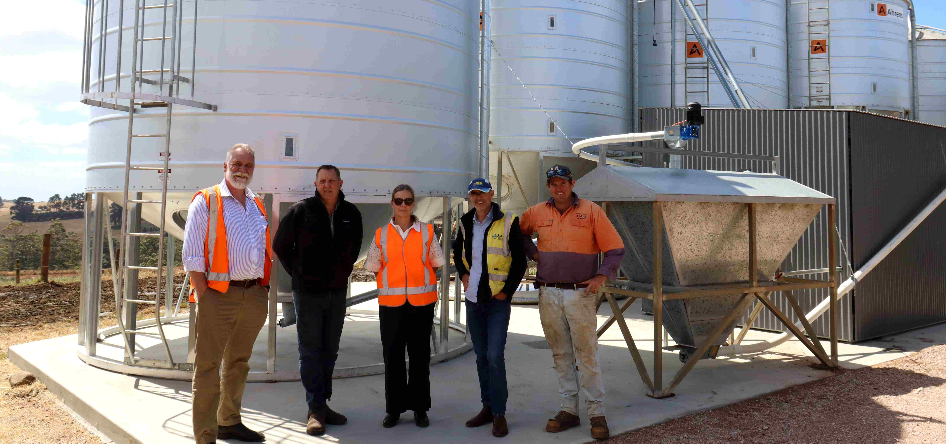
The upgrade centres on a new supplementary feed facility at TIA’s Dairy Research Facility in Elliott, located on Tasmania’s North-West Coast. The project was jointly funded by the Tasmanian Government, TIA and dairy cooperative Fonterra.
According to James Hills, livestock production centre leader at TIA, the new system significantly enhances the site’s research capabilities.
“This upgrade transforms our feeding system from a standard commercial set-up to one designed specifically for complex research trials," he said. "We now have the capacity to feed four different supplements directly to animals in the dairy during milking."
The added flexibility will allow researchers to expand methane mitigation trials involving specific feed additives designed to lower emissions.
“This increased flexibility means we can expand our methane mitigation trials where we feed specific amounts of low-emissions feed additives under various feeding rates,” Hills added. “We can now test methane-reducing feed additives over longer periods and at a scale that reflects commercial dairy farms, while closely monitoring impacts on cow health and milk production.”
The infrastructure upgrade includes the installation of a new feed silo, relocation of two existing silos, a feed head in the dairy, a disk mill, augers and a small shed.
TIA says the improvements will increase research and teaching capacity, create opportunities for industry demonstrations and improve operational efficiencies on the farm.
Andrew Marshall, farm manager at the TIA Dairy Research Facility (TDRF), said the upgrade also allows grain to be processed directly on site.
"Until now, we haven’t had the capacity to process grain on the farm and have been reliant on bringing in commercially produced animal feed from the mainland," he commented. "Processing grain on-site means lower operational costs and new opportunities to source grain from Tasmanian growers."
Marshall noted that the facility operates as a commercial dairy milking around 350 cows while also supporting multiple research programmes. “We’re currently running six mobs that operate as individual farm systems under different treatments, so there are a lot of moving parts. Upgrades like this help us manage that complexity efficiently.”
The TDRF is recognised nationally for pasture-based dairy research focused on improving sustainability and profitability. It is the only facility in Australia designed to run multi-herd 'farmlet' systems, allowing direct comparisons between different farm management approaches under commercial pasture conditions.
The latest installation follows a major redevelopment completed in 2022 and funded jointly by the Tasmanian Government and the University of Tasmania. That project included a new 50-bay rotary dairy, expanded irrigation storage, an effluent dam, 11km of underground irrigation pipeline and the conversion of 32 hectares for irrigated farmlet trials.
TIA said the new supplementary feed facility will support expanded methane mitigation research and help deliver practical solutions to improve both productivity and sustainability across Tasmania’s dairy sector.