The latest news, trends, analysis, interviews and podcasts from the global food and beverage industry



As 2026 approaches, innovation in the food and beverage sector shows no signs of slowing. From tantalising ‘swicy’ flavour combinations and stress-supporting beverages to lab-grown proteins and cutting-edge smart packaging, the year ahead promises to redefine what it means for food to be both indulgent and intelligent. Here, the FoodBev Media team highlights the trends set to shape the industry in the coming year.
Evolving flavour innovation
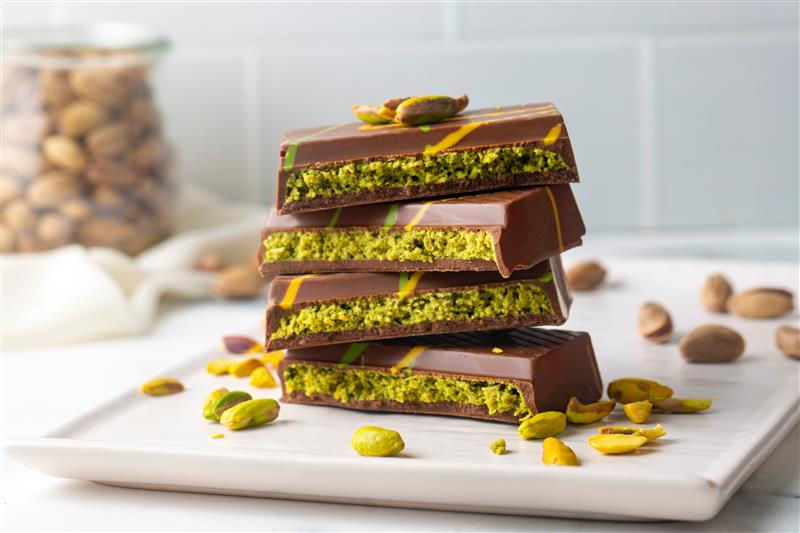
2025 was the year of pistachio, with Dubai-style chocolate capturing imaginations around the world. Pistachios appeared in everything from beverages to sweet baked goods, while their distinctive light green hue made a splash in both packaging and product design.
The Dubai chocolate trend marked a turning point, transforming a single colour and flavour from a social media sensation into a worldwide movement. “Now, manufacturers are exploring pistachio-inspired coffees, ice creams and spirits,” said FoodBev designer Megan Smethurst. “The appeal goes beyond taste; pistachio green has become a symbol of luxury and sophistication.”
She continued: “At the same time, consumers are craving more natural complexity – botanical notes are stepping into the spotlight, bringing floral freshness and wellness cues to both sweet and savoury creations. Expect to see unexpected mashups take centre stage, alongside a revival of natural, garden-inspired profiles – think lavender, rosemary, thyme and hibiscus. Each brings not only depth and aroma but also visual storytelling potential”.
“Much like pistachio and matcha before it, lavender offers a particularly distinct, mood-enhancing hue that’s set to colour the next wave of food and beverage innovation – soothing, sophisticated and unmistakably of the moment.”
Editorial assistant Leah Smith predicts a continued surge in ‘swicy’ – sweet meets savoury – flavour combinations. “What began with hot honey and chilli-infused chocolate has evolved into more sophisticated mashups that balance comfort with surprise,” she pointed out. “Expect to see flavours like mango-chilli, pineapple-tamarind and honey-sriracha move from limited editions to year-round staples.”
For many manufacturers, flavour is no longer just about taste – it is about purpose. In 2026, functionality is stepping into the flavour spotlight. “Consumers increasingly want products that taste great and deliver tangible benefits for mind and body,” said Smith. “From nootropic-infused chocolates to mushroom-powered lattes and botanical-based snacks, wellness is becoming the new dimension of indulgence. Brands are learning that flavour can do more than delight the palate – it can calm, energise or even focus the mind.”

Speaking of wellness...
Health consciousness and regulatory pressures are driving reformulation across the industry. Senior account manager Roberto Donati highlights the rising demand for natural sweeteners such as stevia, monk fruit and date syrup. “Consumers are cautious about artificial additives,” he said. “Brands are responding with clean, plant-based alternatives that deliver on both taste and transparency.”
The next step, Donati predicts, is the union of natural sweeteners with functional ingredients. “We’ll see products that not only cut sugar but also support gut health or cognitive wellbeing – think snacks with sweet proteins or prebiotic fibres, or chocolates infused with monk fruit and nootropics. It’s the perfect blend of indulgence and nutrition.”
Functional ingredients are also breaking out of the performance space and making their mark across the broader active nutrition category. “Consumers are increasingly swapping traditional products for high-protein, low-sugar alternatives that also offer cognitive or recovery benefits,” said awards
executive Samien Abdul. “Collaborations between household names and performance-focused brands, combined with minerals, adaptogens and nootropics, are shaping a new era of accessible, everyday health and active nutrition.”
Wellness trends are also evolving beyond stress management. While 2025 was dominated by products aimed at keeping anxiety at bay, 2026 is set to focus on better sleep. “Consumers want drinks that help them unwind and improve rest – magnesium, adaptogens and CBD (and even THC) are leading the charge,” noted marketing executive Louis Porcelli. “We’re seeing the line between functional wellness and indulgence blur, with beverages that relax, restore and taste great all at once.”
The rise of low- and no-alcohol drinks also shows no signs of slowing, as consumers seek sophisticated options that fit their wellness-focused lifestyles. “Complex functional adult softs are on the rise – premium, alcohol-free drinks infused with nootropics or adaptogens, delivering both sophisticated flavour and tangible wellness benefits,” added awards executive James Taylor.

Move over, protein
While protein was everywhere in 2025, 2026 is poised for a creatine takeover. No longer confined to fitness aisles, creatine is branching out into everyday treats. Gummies remain popular, with brands like TopGum and MyProtein innovating in this space, while Warrior has launched a creatine protein bar range in indulgent flavours such as chocolate orange, chocolate peanut and salted caramel.
“Brands are now blending creatine with nostalgic flavours and new formats,” Melissa Bradshaw, deputy editor of FoodBev and editor of The Plant Base, pointed out. “Partnerships between sports nutrition companies and confectionery brands – like Cellucor’s Jolly Rancher range – are driving this evolution, and more are expected to follow.”
Creatine is moving beyond supplements into lifestyle territory. “We’re seeing gummies, protein bars, and even potential for cookies and cakes,” Bradshaw added. “In 2026, creatine will become a fixture in everyday indulgences, seamlessly combining performance and pleasure.”

Science and tech take the lead
2026 is shaping up to be a year of real shake-ups, as science takes centre stage in product innovation. Lab-grown meat, dairy and seafood could hit a real turning point next year, according to digital news editor Rafaela Sousa. Sousa highlights key developments in cellular agriculture: “This year, the UK’s Food Standards Agency has launched a regulatory ‘sandbox’ to accelerate approval of cultivated meat, with companies like Hoxton Farms and Mosa Meat taking part”.
Sustainability is a core selling point. Brown Foods’ UnReal Milk, for example, replicates the taste and nutrition of cow’s milk while using up to 95% less land and 90% less water. “If cost and consumer perception align,” Sousa enthused, “2026 could be the year lab-grown foods move beyond novelty and into the commercial space.”
Consumers are increasingly seeking sustainable and ethical alternatives to traditional meat. Lab-grown proteins offer a smaller carbon footprint and meet ethical demands, and brands are beginning to highlight these benefits to appeal to eco-conscious buyers. Brown Foods’ UnReal Milk, launched earlier this year, uses around 82% less carbon, 90% less water and 95% less land than conventional dairy production – showing that sustainability can be engineered without compromising taste or nutrition.
Challenges remain – cost, perception and taste – but 2026 could be the year cellular agriculture moves past early adopters. With continued progress, lab-grown foods may soon become a regular supermarket option, marking a new era in protein production and consumption.
Personalisation is also set to become a defining trend. Marketing director Dan Bunt calls 2026 the year of ‘predictive personalisation’. “Brands won’t just know your favourite flavour,” he explained.
“They’ll understand your lifestyle, wellness goals, and even external factors like weather or fitness data.” Meal-kit companies are leading the way, using AI to anticipate consumer choices rather than react to them. “Imagine a system analysing past meal ratings, ingredient preferences, nutritional goals and seasonal habits,” Bunt highlighted. “It could automatically curate the next week’s meal kit with the recipes it ‘knows’ you’ll enjoy most. The process shifts from reactive to predictive, turning convenience into intelligent service. Brands that succeed will be those that use data ethically – enhancing, not exploiting, the customer experience.”
Science is not just changing what is inside the product – packaging is getting smarter, too. “Packaging is no longer just a shell – it’s interactive,” said editorial director Siân Yates.
QR codes, NFC tags and freshness sensors are transforming labels into communication tools. Sustainability is central here as well. Biodegradable films and temperature-sensitive inks reduce waste, while augmented reality and NFC tags turn ordinary cartons and bottles into engaging, informative experiences. “Imagine scanning a milk box to see its farm origin or playing a mini-game on a cereal box,” Yates said. “Smart packaging now blends convenience, transparency and entertainment.”
For brands, these innovations aren’t just gimmicks – they’re storytelling tools and trust builders, a trend that will only accelerate as we move into 2026.

Back to basics
While science continues to shape how food and drinks are made and packaged, there is a clear countertrend emerging: consumers are craving a return to basics, seeking natural ingredients and brands with genuine clean label ambitions.
Sales director Jesus Luna-Lopez highlights how natural ingredients are driving the next wave of reformulation, particularly as organisations such as the US FDA move to ban most synthetic colours.
“Companies are now exploring natural pigments like carotenoids and anthocyanins,” he noted. “These ingredients enhance both nutrition and visual appeal, making ‘natural’ a scientific pursuit as much as an ethical one. In 2026, food and beverage manufacturers will be racing to update formulations.”
In baking, simplicity and authenticity are back in vogue. “Consumers want craft products with heritage and honesty,” said Baking Europe commissioning editor Claire de la Porte. Fibre and gut health are increasingly important, often delivered through heritage grains and natural fermentation. “Sustainability has matured beyond labels,” she added. “Regenerative agriculture, local sourcing and waste reduction now set brands apart.”
Yet affordability still matters – consumers may tighten daily spending, but they will splurge on a premium pastry for a weekend treat.
Protein remains relevant, but new consumer needs are reshaping product development. “GLP-1 medications are changing appetites and portion expectations, keto followers are seeking low-carb alternatives and sugar and salt reduction face both regulatory pressure and consumer demand,” de la Porte explained.
As we look to 2026, the food and beverage industry is set to blur the lines between science, sustainability and pure enjoyment. The next wave of innovation is not just about what we eat or drink – it is about how it makes us feel. The year ahead promises products that delight the senses, nourish the body and reflect a deeper commitment to people and the planet.

Related posts