The latest news, trends, analysis, interviews and podcasts from the global food and beverage industry






Holiday promotions and limited-time offers put pressure on food and beverage supply chains, and they can leave manufacturers with lost margin and post-season waste. Jan Lemmens, vice president food and beverage at OMP, looks at how digital twins and AI help production teams plan around real plant constraints instead of reacting to them.
The fourth quarter is the busiest production period of the year for food and beverage manufacturers, and one of the hardest to plan. Brand loyalty keeps declining, so commercial teams turn to limited-time offers (LTOs), product variations, seasonal packaging and promotional campaigns to win consumer attention. These tactics lift short-term sales. They also put heavy pressure on the supply chain behind them.
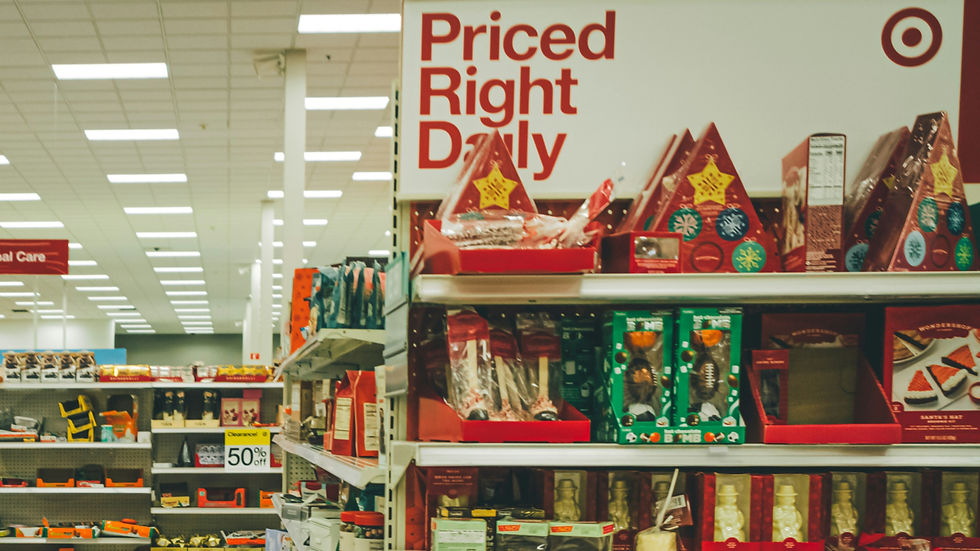
For teams running food processing, packaging and supply chain operations, the holiday rush adds complexity at every step. When promotions ignore what the plant floor can deliver, manufacturers can end up with good product in event-specific packaging that has no buyer once the season ends. Repackaging or destroying it is costly, especially at distribution centres without packaging lines and it cuts into margin.
The cost of disconnected planning
The root cause of these margin leaks is a fundamental disconnect between commercial ambition and supply chain reality. Food and beverage planning has to account for fluctuating agricultural yields, packaging line changeovers, cold-chain temperature limits and shelf-life constraints. If commercial planning assumes unlimited capacity or easy replenishment, the result is usually excess safety stock, waste, and weaker service levels.
Additionally, retailers also set many of the conditions manufacturers work under. A retailer may push its own private-label products when they earn better margins. Replenishment then becomes a balancing act: oversupplying stores with perishable promotional products brings financial penalties, while undersupplying leads to stockouts, lost sales, and a weaker brand image with retailers and consumers alike.
Finally, the proliferation of SKUs makes forecasting harder still. Regional preferences, labelling requirements, allergen declarations and new recycling programs all multiply the variants to plan. If a promotion succeeds beyond expectations, manufacturers may have to pay a premium for outside sourcing or subcontracting, which can erase much of the campaign’s profit. Without a shared view across commercial and operations, teams end up adjusting schedules by hand and expediting freight to keep production running.

Bridging the gap: Reality-based digital twins
To eliminate post-holiday waste and protect margins, forward-thinking companies are moving to AI-enabled supply chain orchestration. At the centre of it all is the supply chain 'digital twin.'
Think of a digital twin as a living mirror of your end-to-end operations, one that continuously reflects real-world constraints and conditions. That includes the nitty-gritty, SKU-level details: bills of materials, bulk production capacities, packaging line availability and exact shelf-life expiration tracking. When planning runs through this single, reality-based view, your sales and supply teams are finally looking at the same current picture of what the business can actually do.
With this digital twin technology in place, planners can run 'what-if' scenarios before putting capital behind a seasonal launch or a major LTO. The simulations show right away how a promotion would affect raw material needs, factory capacity, transportation logistics, and inventory holding costs. Say a demand scenario looks profitable on paper, but it would bottleneck a particular packaging line or break a minimum remaining shelf-life requirement. The twin flags the risk, so your team can adjust the timing or volume of the promotion before it ever hits the floor.
AI-enabled orchestration: Moving from sensing to action
Modern supply chain planning tools use continuous AI sensing to help supply chains shift from reactive to predictive. Decision-centric AI agents keep watch around the clock. They catch emerging risks, like a sudden surge in demand for a seasonal product or a supply crunch on key ingredients and then hand planners a focused set of optimised options.
This kind of optimisation takes a lot of the daily complexity off a retailer’s plate. It cuts changeover frequency and asset idle time during manufacturing campaigns, optimises inventory across multi-level distribution networks, and schedules replenishment to make the most of capacity while hitting target service levels. Environmental costs and greenhouse gas emission rates can also be built into the optimisation, so companies can meet sustainability goals without sacrificing profitability. And because the AI handles those intricate calculations on its own, planners can spend their time on strategic, high-value decisions instead of manual data entry.
Industry leaders and AI-enabled planning
There are several examples of major food and beverage brands that are actively utilising AI-enabled supply chain planning solutions to stabilise operations, manage volatility, and standardise complex multi-site networks that can be learned from:
• Preventing waste and stockouts (Kraft Heinz): Kraft Heinz set out to build an intelligent, sustainable value chain, and brought its data and processes together from farm to table. With AI optimisation, the company cut physical waste by roughly five percent and reduced total inventory by about $90 million year-over-year. Today, more than 80% of its inventory stays within defined target limits, which means much more reliable replenishment for retail and foodservice partners.
• Managing agricultural volatility (JDE Peet’s): Coffee roasters deal with very long lead times that stretch all the way back to origin, which leaves them exposed to commodity price swings and global harvest disruptions. JDE Peet’s put a fully integrated planning solution in place to manage that complex sourcing. The result: lower storage costs and service levels protected against upstream supply shocks.
• Standardising multi-site operations (Duvel Moortgat): Brewers face tight seasonal capacity and excise-driven regional differences. To tackle that, Duvel Moortgat recently standardised its demand and operational planning across three Belgian breweries using advanced digital planning solutions. By moving away from fragmented, site-specific practices, the brewer has optimised its capacity utilisation and significantly reduced changeovers on the floor, all while keeping its market-leading service levels.
The path forward
For F&B manufacturers, the Q4 promotional push doesn’t have to mean squeezed margins and chaos on the production floor. The old approach, where plans fall apart the moment they run into the physical limits of the shelf or the packaging line, just doesn’t hold up anymore in a market defined by tight margins, complex product portfolios, and shifting consumer behaviour.
By embracing AI orchestration and building a centralised, reality-based digital twin, F&B manufacturers can bring their commercial ambitions and operational capabilities into lasting alignment. The payoff is simple: when the holiday rush arrives, your supply chain isn’t scrambling to react. It’s executing a highly optimised, highly profitable plan.