The latest news, trends, analysis, interviews and podcasts from the global food and beverage industry





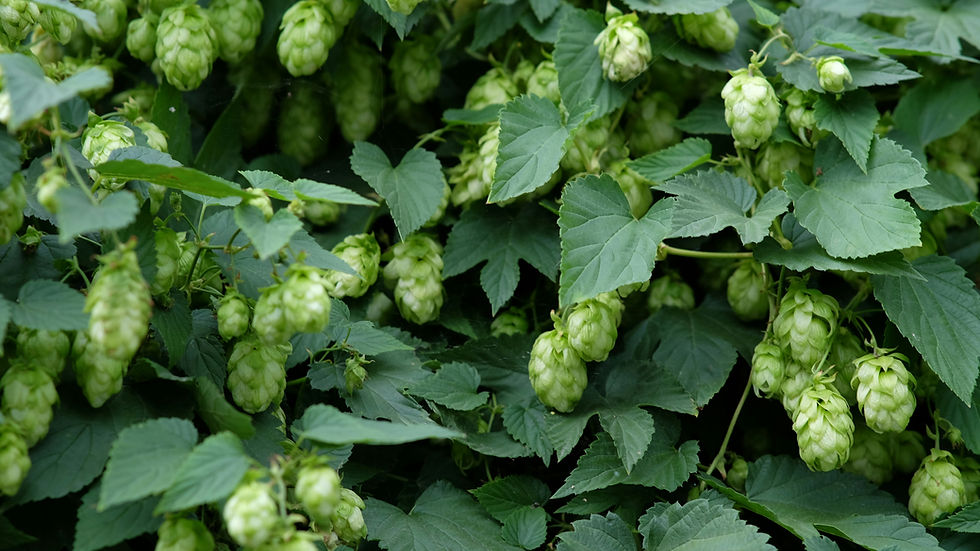
Suntory Global Innovation Center (SIC) has identified a genetic region linked to drought tolerance in hops, in a development that could help accelerate the breeding of varieties better able to withstand the effects of climate change.
The research, conducted with the Hop Research Institute in the Czech Republic, identified a region on chromosome 3 associated with drought tolerance and pinpointed HlMYB113 as a candidate gene within that region.
The findings were presented at the 32nd International Horticultural Congress (IHC2026), held in Kyoto, Japan, from 23 to 28 August.
Hops are a critical raw material for the brewing industry, providing beer with its characteristic aroma and flavour. However, increasingly dry growing conditions are putting pressure on production in some of the world's key hop-growing regions.
The Czech Republic, in particular, has experienced increasing soil dryness in recent years as rainfall has declined, contributing to reduced hop yields.
SIC has been working with the Hop Research Institute on hop research since 2010, with joint research and development focused on drought-tolerant varieties beginning in 2018.
The programme has already resulted in the development of a new drought-tolerant hop variety. Researchers selected a drought-tolerant breeding line and repeatedly crossbred it with high-quality hop varieties, producing the new variety in November 2024.
That variety is now undergoing a large-scale field trial covering approximately 4.2 hectares in the Žatec region of the Czech Republic, where its quality and yield are being assessed.
The latest research could make the breeding process more efficient. The team analysed a segregating population produced through crossbreeding, combining plant and yield characteristics under drought conditions with next-generation genome sequencing.
This enabled researchers to identify genomic regions associated with drought tolerance and subsequently assess candidate genes linked to the trait.
The analysis found that drought-tolerant lines carried multiple single nucleotide polymorphisms (SNPs) in the promoter region of HlMYB113, when compared with the publicly available hop reference genome.
Plants carrying these genetic variants demonstrated significantly greater shoot growth under drought conditions, providing a potential genetic marker for more efficient selection of drought-tolerant plants.
For the brewing sector, the work represents a step towards developing hop varieties capable of maintaining consistent quality and yields as growing conditions become more challenging.
SIC said the research could accelerate the development of varieties able to produce high-quality hops under changing environmental conditions associated with climate change.
The company also said the findings could have applications beyond hops, potentially supporting research into drought-stress tolerance and breeding technologies for other agricultural crops.
The research builds on previous work by Suntory in hop genetics, including the world's first draft genome sequencing of hops in 2014 and research that elucidated the hop sex-determination system in 2025.
Suntory said it will continue its research into hop science and breeding technologies as it seeks to support more resilient cultivation and the long-term sustainability of hop supplies.