The latest news, trends, analysis, interviews and podcasts from the global food and beverage industry


For decades, the barcode seen on supermarket shelves has served a simple, functional purpose. Designed for a linear economy built on a “take-make-dispose” model, its purpose has been straightforward: to enable systems to look up basic product data such as price, stock levels or SKU information and scan items quickly at checkout.
But today’s market realities require more. As the industry shifts toward a circular economy, where materials circulate for longer and data transparency becomes essential, brands must share more information with consumers, supply chain partners and regulators. Meeting these expectations requires a new digital foundation – and it starts with the barcode.
The shift to GS1 2D barcodes
Unlike traditional linear barcodes, GS1-powered 2D barcodes, including DataMatrix and QR codes, can store significantly more data and connect directly to digital product information. This enhanced capability is why GS1, the standards organisation behind the original barcode, has announced that the global consumer packaged goods (CPG) industry will begin transitioning from 1D to 2D barcodes starting in 2027.
The GS1 2D barcodes connect GTINs and other identifiers to dynamic online information, extending product data well beyond what can be printed on packaging.
A single 2D code can include:
A URL linking to digital product information
GS1 identifiers like GTIN (product), LGTIN (batch/lot), and SGTIN (serialized item)
By embedding a URL, the GS1 Digital Link connects physical products to dynamic online information – ranging from ingredient lists and sustainability details to recall notices, marketing promotions or recycling instructions. Even better, companies can update this linked content in real time without changing the printed code.
In the coming year, most supermarket products will carry a digital identifier – most often the GS1 2D barcodes. These QR codes won’t be static – they’ll deliver tailored, real-time content based on language and location, thanks to smart URL redirection. Combined with batch or unique serial numbers, they unlock the full potential of Digital ID technology.
A further benefit for packaging teams is that 2D barcodes can reduce on-pack clutter, consolidating multiple codes and logos into a single symbol. They also require significantly less space, approximately 10 times less, than a traditional 1D barcode.
Supporting manufacturers through the transition
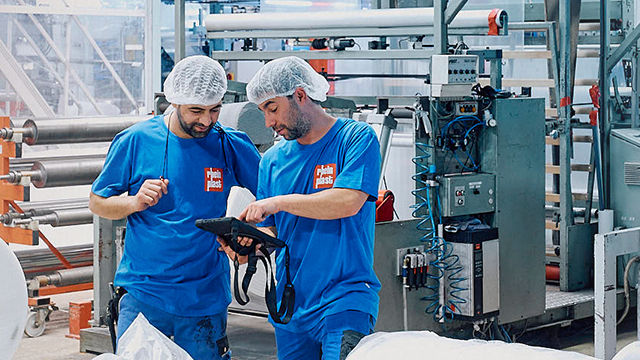
For food and beverage manufacturers, the move to GS1 2D barcodes brings both opportunity and operational complexity. High-speed lines, diverse packaging formats, and strict quality requirements all demand a precise and reliable approach to code generation, printing and verification.
This is where Inexto plays a key role.
With extensive experience delivering end-to-end traceability solutions for some of the world’s most complex industrial environments – from fully automated high-speed lines to manual production set-ups – Inexto helps manufacturers implement GS1 2D barcodes with confidence. Our solutions ensure that every code is printed accurately on the production line, every product is traceable throughout its lifecycle, and every scan delivers the right experience to the end consumer.
As a GS1 Switzerland Solution Partner, Inexto guides companies through a smooth, compliant and future-proof transition to GS1 2D standards. From line assessment and code management to verification, serialization, and digital content experience, we support food and beverage brands at every step of their digital transformation.
The time to transition is now
As the industry moves toward a future defined by transparency, 2D barcodes will play a central role in how products are identified, traced and communicated to consumers.
The transition is underway, and food and beverage manufacturers that prepare now will be best positioned to capture the benefits – greater efficiency and richer consumer engagement.
To help food and beverage brands prepare for the next generation of barcodes, we built an all-in-one resource hub that breaks down:
What’s changing and when
What's next for food and beverage manufacturers
What trends are leading beverage brands watching, to stay ahead of the competition
Visit resource hub here.