The latest news, trends, analysis, interviews and podcasts from the global food and beverage industry


Multi-layered textures, unique inclusions and luxurious, premium flavours are elevating today’s ice cream innovations, transforming them from basic summer snacking staples into immersive, sensory-led eating experiences for all occasions. FoodBev brings you the scoop.
Few dairy categories master indulgence quite like ice cream – a category in which creamy, rich mouthfeel and sweet syrupy swirls reign supreme, continuing to tempt consumers over to the frozen treats aisle despite growing health-consciousness.
Though interest in lower-fat, lower-calorie frozen dessert options has risen over the years, the ice cream market’s biggest purchase drivers continue to be indulgence, taste and enjoyment. Ice cream is a prime example of the kind of small luxury consumers seek in this so-called ‘treat economy,’ whereby people choose to seek comfort in affordable indulgences amid times of uncertainty.
Mintel research found that in the UK, nearly half (49%) of consumers find it easier to justify indulgent treats following the Covid-19 pandemic. Matthieu Rouvillain, ice cream lead at Cargill, said: “Even amid continued pressure on household budgets, consumers seemingly continue to prioritise small indulgences, although often less frequently”.
“The emphasis is increasingly on ‘fewer but better’ moments of treat consumption, where consumers expect a premium experience that feels worth the purchase.”
Peter Howard, North Europe processing specialist at Tetra Pak, agreed: “In response to uncertain socioeconomic times, consumers are seeking playful, comforting and multi-sensory pleasures that ground them in the present. Low-cost unique products that engage the senses offer consumers a much-needed break from everyday stresses.”
Texture as a differentiator
Flavour will always be important, but more than ever, texture is playing a significant role in developing ice cream products that stand out.
“Consumer expectations around food have evolved beyond taste alone,” noted Cargill’s Rouvillain. “People are increasingly seeking experiences that engage multiple senses…in ice cream, this is translating into a stronger focus on texture as a point of differentiation.”
“These formats move beyond traditional ice cream structures to deliver a more dynamic and interactive
eating experience.”
According to Cargill’s own research, 85% of consumers are seeking multi-sensory experiences, with texture ranking only second to taste among their priorities.
“This is reflected in growing demand for layered formats and contrasting textures,” he commented, adding that the use of ingredient solutions such as texturizers, chocolate solutions, inclusions and fillings are enabling the development of multi-textured experiences across every layer of an ice cream product – from the ice cream body itself to coatings, sauces and inclusions like fruit, nuts and confectionery.
Mintel’s data reflects this growing interest in variety, with 32% of UK ice cream buyers prompted to try new packaged ice cream products when offered a unique texture.
“When it comes to innovation, manufacturers increasingly need to think beyond just flavour to deliver total, multisensorial experiences that combine taste, texture, sound and visual appeal,” said Louise Morley, ice cream marketing director for UK and Ireland at The Magnum Ice Cream Company.
The company’s new Volcanix product line, launched under its Wall’s brand, offers an example of this – described by Morley as a “bold new ice cream architecture” designed to fulfil demand for exciting taste experiences.

“It blends different layers of complimentary tastes and textures: a crunchy chocolatey biscuit coating, smooth vanilla and chocolate ice cream, a core of rich caramel sauce, and chocolate-coated caramel rocks,” Morley said.
Texture brings added novelty to the eating experience and provides added stimulation for consumers seeking out food for enjoyment, most of whom are when buying ice cream products.
And as Morley pointed out, even factors like sound play a significant role – research studies have highlighted the psychological effect that all sensory attributes, including sounds, can have on consumer perceptions of flavour, food quality and satisfaction.
“Multisensorial experiences have always been central to the Magnum brand and have been a key driver of its enduring popularity…We’ve even done acoustic tests in our factories to ensure that every Magnum product delivers that signature Magnum crack,” she said, referring to the cracking experience delivered by the iconic treat’s hard chocolate shell.
Cargill’s Rouvillain noted that innovation is expanding in coatings and inclusions – “particularly with the use of alternatives to traditional ingredients that enable new sensory profiles while supporting evolving sourcing and formulation needs”.
Ingredients companies are providing alternatives to chocolate coatings and inclusions, enabling an indulgent and multi-textured sensory experience while adapting to the ongoing volatility in the cocoa supply chain.
Cargill has launched NextCoa in the US, in collaboration with cocoa-free chocolate start-up Voyage Foods, suitable for ice cream inclusions alongside other applications. The solution is made from upcycled grape seeds and sunflower kernels, based on Voyage’s patented technology. Elsewhere, CSM Ingredients has recently introduced Nuaré, a carob-based cocoa alternative range suitable for bakery and ice cream applications. In ice cream, it can be used to create smooth, chocolate-like coatings, optimised for viscosity and adhesion with a smooth, glossy finish.
The rise of ‘gourmet’ ice cream with unique inclusions also drove the launch of a new ingredient dosing solution from Tetra Pak last year, enabling manufacturers to precisely dose ice cream inclusions consistently across each scoop. It is suitable for a range of inclusions, from large cookie pieces to sticky fruits.

This year’s launches respond to the growing demand for unique mix-ins and textural diversity – Ben & Jerry’s has recently expanded its Sundaes range in the US, with products that feature layered ice cream with whipped toppings. Inclusions include shortcake cookies, graham crackers and fudge chips, while in the UK, recent launches from the brand include indulgent inclusions such as doughnut-style dough chunks and cinnamon swirls.
US-based frozen novelties brand Chipwich has also recently introduced two indulgent textural-led ice cream cookie sandwich innovations, featuring premium nut pieces rolled around the outside. The brand spotted a gap in the market, responding to research from the Dairy Foods Association that found nuts are ranked above sprinkles and chocolate chips among the top five most popular ice cream toppings – yet have remained ‘notably absent’ from ice cream sandwich formats.
These launches also tap into nostalgic flavour trends, adding further comfort for consumers. “Flavour-wise, there is a strong interplay between nostalgia and novelty,” said Cargill’s Rouvillain. “Classic profiles like chocolate and vanilla remain dominant, but are being reinterpreted through more modern, layered or globally inspired combinations, often referred to as ‘newstalgic’ experiences.”
Taste and premium positioning
Sensory-led indulgence is reinforcing the premiumisation trend, with the gourmet ice cream sector projected to grow by $13.96 billion between 2023 and 2028 according to data cited by Tetra Pak.
Niina Gerritsen, customer development manager at Valio, commented: “Premiumisation, social media influence and the desire for indulgence and new experiences all play an important role in raising consumer interest…global exposure to artisanal and speciality desserts has raised consumer expectations.”
Chef-led, high-end product positioning and rich, complex flavour profiles are on the rise in this category, with premium flavour profiles driving differentiation and creating more meaningful experiences for consumers.

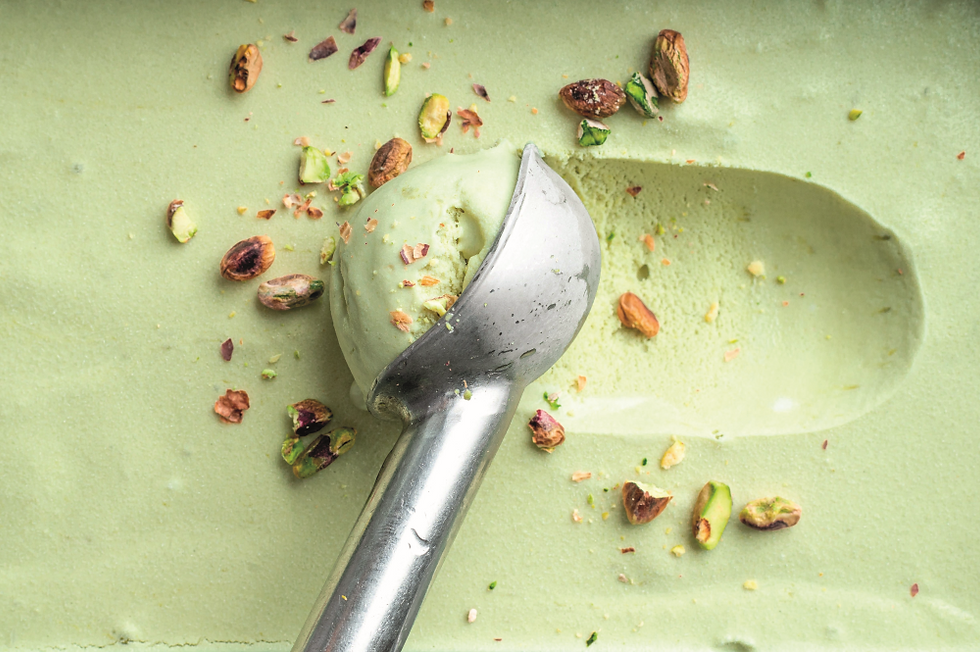
Chef Yotam Ottolenghi’s range of ice creams, launched at Waitrose, tap into this demand with innovative flavours designed to reflect his culinary style. These include Madagascan vanilla and miso salted caramel; roasted pistachio and sour cherry; coffee and cardamom; strawberries and cream with sumac; and Ecuadorian chocolate with toasted malt and sea salt.
The Magnum Ice Cream Company has also built on its premium Magnum Signature range this year – Magnum La Pistache features a pistachio-enriched shell with caramelised, salted pistachio pieces and a pistachio paste-based gelato core, while Magnum La Pêche offers a peach-led shell with peach-flavoured sugar pieces and a peach gelato core.
Valio’s Gerritsen told FoodBev: “Premium ice cream is often expected to be richer in taste and superior
in texture, and expected to create a memorable, happy moment. Artisanal ice cream often gives perception of craftsmanship and quality.”
“Consumers justify higher prices when products deliver indulgence and originality, making texture a key value driver alongside flavour.”
Cargill’s Rouvillain acknowledged the formulation challenges around delivering a high-quality sensory experience – texture, flavour release, melting behaviour and stability are all interconnected, with small changes in formulation significantly impacting the final product, he said.
“Key challenges include maintaining creaminess and mouthfeel while adapting formulations for cost, nutrition or alternative ingredients. For example, reducing sugar or fat affects not only taste but also structure, freezing behaviour and texture,” he said.
“In plant-based or hybrid formulations, replicating the functionality of dairy proteins and fats adds further complexity, particularly in achieving the same smooth texture and melting profile.”
Tetra Pak’s Howard highlighted the importance of mouthfeel: “Mouthfeel is essential to the delivery of a high-quality ice cream and is underpinned by four key elements: structure, body, eating properties and creaminess,” he explained. “For producers, the challenge is to adjust these parameters to create the optimal mouthfeel for the product and target consumer.”
“The different elements of mouthfeel can be created – and adjusted – in different ways but they are all interconnected, meaning that changing one will influence the others.”
Ultimately, Rouvillain concluded that the challenge is ensuring that the entire ingredient system works together cohesively. “The most important point is that sensory innovation in ice cream is no longer about isolated elements. It is about how the entire formulation works together to deliver a consistent, high-quality experience,” he said.
“Consumers are raising expectations across the board. They want indulgence, but they also expect products to align with their broader preferences around nutrition, transparency and value.”