The latest news, trends, analysis, interviews and podcasts from the global food and beverage industry



The UK's Royal Academy of Engineering recently collaborated with leading engineers to predict what 2076 could look like on Earth and beyond across the topics of food, fashion, transport and more, in celebration of UK National Engineering Day earlier this month. In this exclusive piece for FoodBev Media, Ben Crowther, a representative of the Academy and co-founder of aeroponic technology company LettUs Grow, gives his views on the future of food and drink specifically.
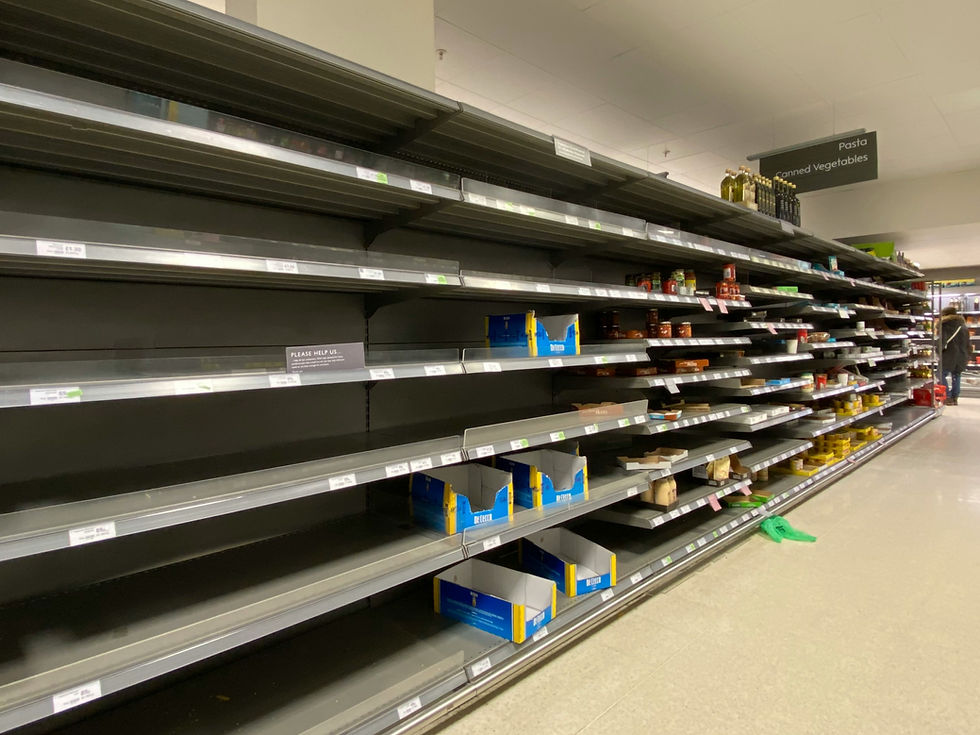
According to Nestle’s 2026 Made in Britain campaign, almost 40% of Britons ‘rarely consider’ where their food comes from. Bearing in mind that we’re experiencing sharp declines in agricultural output and food security across the globe, the fact that few consider what it actually takes to bring food from farms to forks is surprising.
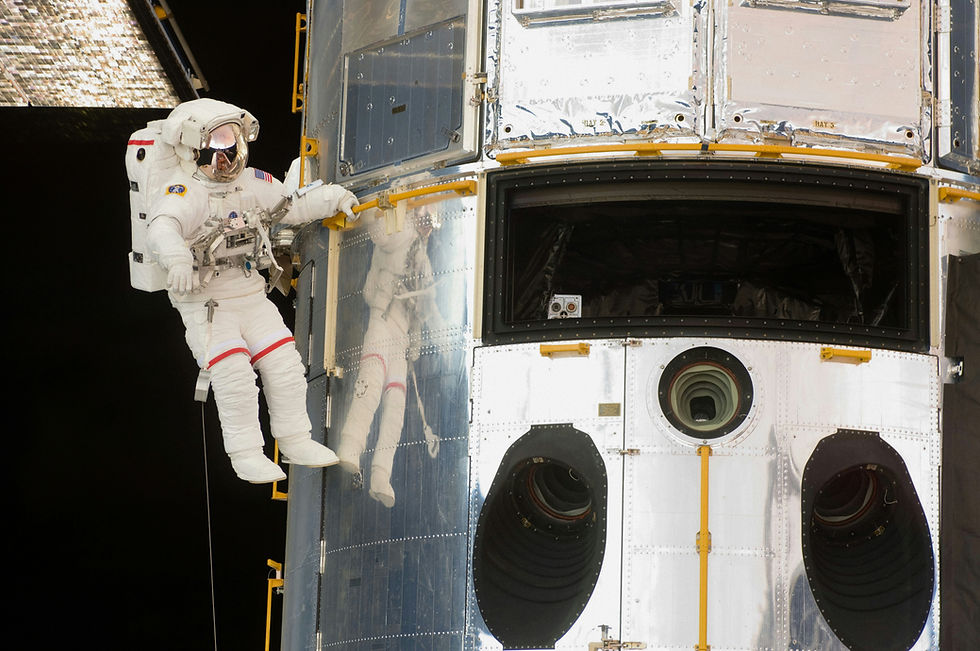
Imagine how much sharper that disconnect will be as and when humans start moving to off-world communities and find themselves with fewer resources than ever before.
This is a challenge I’ve been thinking about a lot as part of my work with The Royal Academy of Engineering, as we try to engage the next generation of engineers to help shape a world only previously conceptualised in science fiction.
Growing food in space
Thinking about our food system more holistically, we know the key resources needed are light, water, energy and space – all of which would be in short supply in off-world communities.
Today, food is freeze-dried and sent up to the International Space Station (ISS). Indeed, astronauts on the ISS enjoy a varied menu of over 100 items, including pasta, seafood, desserts, even fruits. But to build a long-term food supply off-world, it must be grown.
The first and most obvious consideration is to bring all agriculture to indoor greenhouses, as plants cannot grow in zero-oxygen environments.
The fundamental technologies to solve this challenge are already a mainstay in agriculture on Earth. A huge proportion of our tomatoes, peppers, cucumbers and a growing portion of our leafy greens and herbs are grown in high-tech greenhouses and vertical farms.
In the future, greenhouses in space might not look too dissimilar to those on Earth today and could viably feed our civilisations.
Firstly, greenhouses would be completely closed systems engineered to keep a perfect balance of oxygen and carbon dioxide in constant supply.
Beyond organising the atmosphere itself, there are many opportunities to convert waste to power and preserve precious resources. Biomass, including human waste, will be cleaned and broken down into fertiliser, while food waste could be used to make soil.
Next, red and blue grow lights would be used to supplement natural sunlight and to ensure a regular circadian rhythm that plants need, offsetting the two-week (or more) long days in space. Plants ‘sleep’ too!
This is not just a challenge for electricians, but an opportunity for software engineers. In fifty years, Artificial Intelligence could unleash an automated, insight-driven system for emitting light, targeted to individual crops’ needs.
Finally, when it comes to ensuring that life on Earth can also thrive, not just survive, the limitations of what we can do in space provide a vital provocation for how we can manage our increasingly constrained resources at home. This is particularly resonant for water systems, as water scarcity takes a growing share of the world agenda.
In 2076, we will build off-world water systems with circularity in mind. Any drop of water can and will be reused, thanks to innovative filtration systems. I am hopeful that these advances will be used on Earth too. Early versions of this exist on Earth already. Many greenhouse producers use multi-stage filtering, including UV light and reverse osmosis, to reclaim clean water that can be used to irrigate crops for many cycles.

From farm to fork – what we’ll actually be eating
In future off-world communities, diets could look radically different and may largely boil down to functional considerations over taste.
Without adequate space to grow cereal grains, staple foods like bread could be replaced with root vegetables – which are nutrient-dense, take up much less space and provide enough calories while also being relatively easy to grow.
Animal agriculture, while not impossible, would be difficult to execute in space, at least not without compromising on welfare.
However, aquaculture is more feasible, meaning off-world communities may well experience a dramatic uptick in fish consumption. Back on Earth, the impact of climate change will represent a similar change in diets, marked increasingly by resource scarcity, waste reduction, and functionality.
What we may also see is a larger wealth disparity. Those who have the means and space to grow crops and cultivate meat will do so. Those who have less will go without, unless there is meaningful change across the food system.
What food producers need to know
The task of looking 50 years ahead and imagining life on the moon and Mars is an entertaining activity. Looking into the future brings resource scarcity, circularity and the need for efficiency in all forms into sharp focus. That external constraint changes your thinking on what is important.
On Earth, we can fall into the trap of viewing resources like water, electricity and land as somewhat infinite. It is not. Agriculture is responsible for around a third of global CO2 emissions and 72% of fresh water withdrawals. It is a massive industry and has a major impact.
I doubt that’s new information to you. As food producers, sustainability and scope 2 and 3 emissions have been priorities for a long time, as much as their importance may ebb and flow with the political winds.
In the real world, as food producers, sustainability has to be balanced against commercial reality, customer demands and the economic climate. This can make it extremely difficult to justify spending more for more sustainable produce, but it remains important, and we can each have a small positive impact if we choose to.