The latest news, trends, analysis, interviews and podcasts from the global food and beverage industry




The UK Government has launched a major reform of school food policy, setting out plans to update the country’s School Food Standards for the first time in more than a decade, with a strong focus on nutrition, reformulation and enforcement.
The proposals, now under a nine-week consultation, aim to improve the quality of meals served in schools by restricting foods high in fat, salt and sugar while increasing the provision of fruit, vegetables and wholegrains across both breakfast and lunch menus.
The overhaul comes amid growing concern over children’s diets in the UK. According to government data, one in three children leaves primary school overweight or obese, while tooth decay, largely driven by high sugar consumption, remains the leading cause of hospital admissions among children aged five to nine.
"Every child deserves to have delicious, nutritious food at school that gives them the energy to concentrate, learn and thrive – meals that children will actually recognise and enjoy, backed by robust compliance so that good standards on paper become good food on the plate," said education secretary Bridget Phillipson
Polling also indicates that 74% of parents have concerns about their children’s nutrition, with key issues including excessive sugar intake and insufficient fruit and vegetable consumption.
Health minister Sharon Hodgson said: "Children are consuming twice the recommended amount of free sugar and offering more nutritious meals at school is a great way of ensuring they eat healthier food. We’re determined to reduce the child obesity epidemic and the new School Food Standards represent another piece in a jigsaw of measures designed to help raise the healthiest generation of children ever."
Under the proposed standards, schools will face tighter restrictions on everyday menu items. “Grab-and-go” options such as pizza and sausage rolls will no longer be permitted daily, deep-fried foods will be banned outright, and fruit will replace sugary desserts for the majority of the week.
For food manufacturers and contract caterers, the updated standards are expected to drive reformulation and innovation, particularly in areas such as reduced-sugar products, wholegrain ingredients and minimally processed offerings.
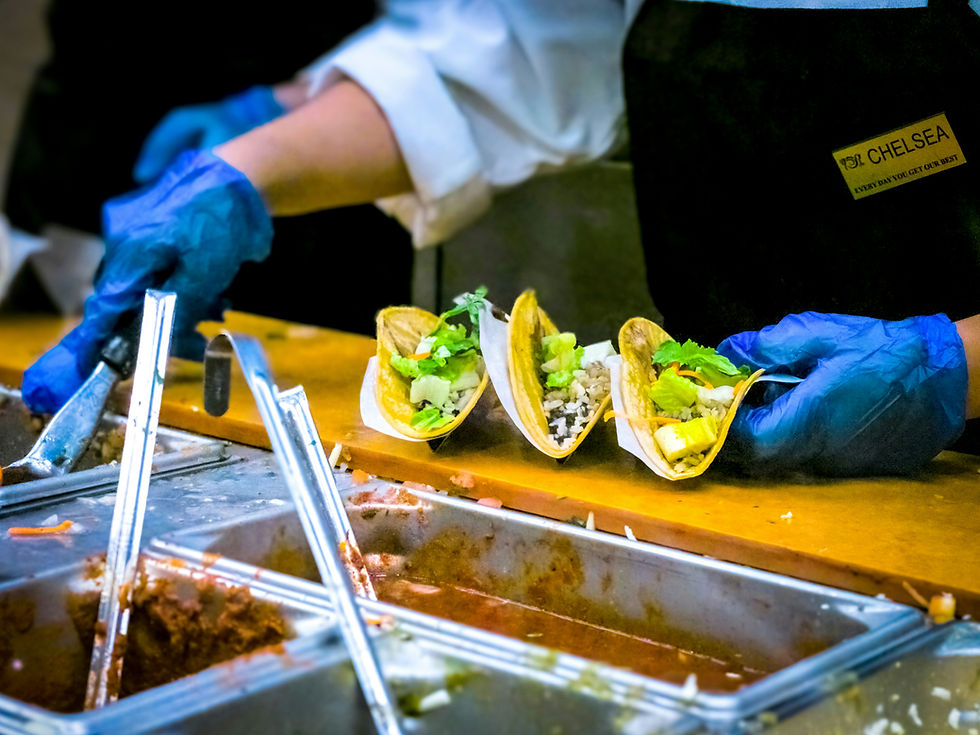
Sample menus outlined in the proposals point toward more scratch-cooked, globally inspired dishes, such as burritos, jerk chicken with rice and peas, and plant-forward wraps, signalling a shift toward fresher, more diverse meal formats.
The move is also likely to accelerate demand for compliant ingredients and products that meet stricter nutritional benchmarks while maintaining cost efficiency at scale.
The policy update coincides with a broader expansion of school food programmes. More than 500 new free breakfast clubs are opening this month, adding to 750 already in operation and collectively serving up to 142,000 children.
In parallel, the government has confirmed plans to extend free school meal eligibility to over half a million additional children from September 2026, positioning school food as a central lever in addressing both public health and food insecurity.
A key feature of the overhaul is the introduction of a national compliance and monitoring framework, an area long criticised as a weakness of previous standards.
Full details of the enforcement system are expected in September, with implementation scheduled for September 2027. Schools will also be encouraged to appoint a dedicated governor responsible for food and to publish menus and food policies online, improving transparency for parents and stakeholders.
These changes are supported by food campaigners, charities and nutritional experts, including Bite Back, Tom Kerridge, Chefs in Schools, Emma Thompson and Henry Dimbleby.
Jamie Oliver, chef and campaigner said: "Twenty years ago, dog food had higher standards than school dinners. I’ve been banging the drum ever since because I refuse to accept our kids being fed anything less than proper, nourishing meals.
"School food is the UK’s most important restaurant chain. From September, during term-time, schools will provide two-thirds of a child’s daily diet - a massive opportunity to improve health at scale. My Good School Food Awards prove that world-class meals are possible right now, and every child deserves that same quality. So, I’m delighted this government is now updating and enforcing these standards."
Many schools are already leading the way with delicious, nutritious meals that children love - proof that higher standards are both achievable and popular. But while many are already serving healthy school dinners, these new standards level the playing field so that every child – no matter where they live – gets good-quality food at school.
Naomi Duncan, CEO at Chefs in Schools, one of the lead partners of the School Food Project, said: "We are pleased to see the first update to school food standards in over a decade, and a commitment to monitoring that means these measures will have real impact. Suggested changes will see a shift towards more freshly prepared and delicious meals that are packed full of nutrition. More fruit and veg and fibre will be served so that young people get all the goodness they need to grow up healthy and thrive."
Beyond individual menu changes, the updated standards reflect a broader shift toward embedding nutrition, food education and sustainability within the school system.
For the food and beverage industry, the reforms represent both a compliance challenge and a growth opportunity – particularly for suppliers able to align with evolving public sector requirements around health, transparency and ingredient quality.
As consultation progresses, the focus will turn to implementation – particularly how schools, caterers and suppliers adapt to deliver higher standards consistently across the country.