The latest news, trends, analysis, interviews and podcasts from the global food and beverage industry


From major M&A activity and regulatory shake-ups to executive restructures and high-stakes legal battles, 2025 proved to be another pivotal year for the global food and beverage industry – all reflected in the stories that drew the most attention throughout the year.
Below, we round-up the 15 most-read FoodBev news stories of 2025.
Trump announces further changes to Canada and Mexico tariffs

In March, US president Donald Trump suspended tariffs on imports from Canada and Mexico that are covered by the US-Mexico-Canada Agreement (USMCA) trade deal.
The White House announced adjustments to the previously announced 25% tariffs on Canadian and Mexican goods on 6 March. In a statement, it said that the changes aimed to minimise disruption to the automotive supply chain – however, the adjustments will also impact food and beverage imports among other goods.
PepsiCo's Frito-Lay fined $36m for breaching antitrust regulations in Turkey

Earlier this year, PepsiCo subsidiary Frito-Lay was fined by approximately 1.3 billion Turkish lira (approx. $36 million) after Turkey’s Competition Authority found it had engaged in anti-competitive practices designed to restrict rival brands' access to the market.
The investigation focused on whether Frito-Lay, which owns popular snack brands such as Doritos, Ruffles, Lay’s and Cheetos, had violated the law by preventing the sales of its competitors and attempting to exclude them from the packaged chips sector.
Alongside the penalty, Frito-Lay implemented measures to ensure fair competition, particularly at smaller retail outlets of under 200 square metres.
PepsiCo announces major leadership reshuffle to streamline global operations

PepsiCo implemented a significant restructuring of its executive leadership team, with six promotions and three high-profile departures, back in March.
The changes include expanded regional roles for Alexandre Carreteiro, now overseeing Brazil and South Cone Foods, and Silviu Popovici, whose remit extends to lead the combined Europe, Middle East and Africa Foods and Bottling Operations. Roberto Martinez moves into a new dual role as international chief commercial officer and CEO of new revenue streams, while Steven Williams becomes PepsiCo North America CEO.
The new structure established three operational hubs – LatAm Foods, EMEA and International Beverages – reflecting PepsiCo’s broader manufacturing realignment. Analysts say the move follows increased investment in emerging-market facilities and a push for “regional autonomy with centralised innovation”.
Departures include Eric Hanson, Vikram Somaya and Wern-Yuen Tan, as PepsiCo centralises its partnerships and analytics functions.
Texas Governor Greg Abbott signs bill mandating food warning labels

Packaged food and drink sold in Texas containing certain artificial ingredients will require on-pack warning labels following the signing of Senate Bill 25 by Governor Greg Abbott this weekend.
The bill passed unanimously in the state senate and was handed over to Abbott for review in June. Dubbed the ‘Make Texas Healthy Again Act,’ the bill is said to be backed by US health secretary Robert F. Kennedy Jr.
Abbott signed the bill on Sunday 22 June 2025, alongside a further 1,154 bills signed into law and 28 vetoed bills.
Keurig Dr Pepper acquires drink mix maker Dyla

Keurig Dr Pepper (KDP) acquired full ownership of Dyla Brands, a player in the powdered drink mix and liquid water enhancer market, this July.
Recent data from KDP's 2025 State of Beverage report indicates a notable shift in consumer preferences, with 59% of Americans expressing interest in new flavours and 60% keen on trying flavoured water enriched with antioxidants and vitamins.
This trend aligns with Dyla’s product portfolio, which includes the leading natural water enhancer brand, STUR, known for its absence of artificial flavours and sweeteners.
‘World’s largest’ regenerative agriculture study highlights productivity benefits for European agri-food sector

A new study launched by the European Alliance for Regenerative Agriculture (EARA), funded by EIT Food, has found that farmers can produce ‘significantly more food for less’ by transitioning to regenerative practices.
The study involved 78 regenerative farms in 14 countries, covering over 7,000 hectares. It benchmarked these farms against their neighbouring and national average conventional farmers, aiming to dispel ‘the myth that only the status quo of conventional, synthetic input-heavy agriculture can feed Europe and the world’.
Undertaken by a team of 11 researchers, it informs how a future Common Agriculture Policy and agricultural policies that reward farmers’ results-based agroecological performance can be designed and put into practice.
Between 2020 and 2023, the study found that regenerating farmers achieved just 1% lower yields on average, in terms of kilocalories and proteins, while using 62% less synthetic nitrogen fertiliser and 76% less pesticides per hectare.
From 2018 to 2024, they achieved over 15% higher photosynthesis, soil cover and plant diversity compared to neighbouring fields. They achieved a 17.2% increase in total soil cover and a 17.1% increase in total photosynthesis compared to conventional farmers over the past seven years.
Tyson Foods announces $23.5m investment in Henderson County facility

Tyson Foods unveiled plans for a substantial investment of nearly $23.5 million to expand and modernise its facility in Henderson County, Kentucky, US. The move aimed to support the retention of over 1,100 jobs and underscores the company's long-standing commitment to the region.
This investment is set to enhance the facility in Robards, allowing Tyson to meet the growing market demand for protein products.
The project includes the installation of new equipment and upgrades to existing infrastructure, which are anticipated to increase both production capacity and product diversity.
Functional chocolate brand Awake secures CAD $8m to accelerate growth

Functional snack brand Awake Chocolate has successfully closed an CAD $8 million (approx. $6 million) funding round aimed at supporting its rapid growth and product innovation.
The investment was led by Btomorrow Ventures, the corporate venture arm of British American Tobacco (BAT), alongside contributions from BDC Capital. This latest round brings Awake's total funding to CAD $15.5 million (approx. $11.5 million USD), reflecting strong investor confidence in the brand's trajectory.
The new capital will be strategically allocated to enhance supply chain efficiency, bolster research and development, and expand marketing efforts.
Kraft Heinz unveils $300m in US promotions as consumer spending decreases

The Kraft Heinz Company has announced a significant increase in its promotional investments, allocating an additional $300 million in the US market as part of its strategy to navigate ongoing economic challenges and prepare for a planned separation into two independent entities by 2026.
During the company's recent Q3 earnings call, CEO Carlos Abrams-Rivera highlighted a modest recovery in top-line performance for the third quarter of 2025, despite a backdrop of persistent inflation and declining consumer sentiment. "We are committed to driving performance today while positioning both businesses for long-term success," he said.
Kraft Heinz’s latest results reveal that US consumers are cutting back on food purchases, with inflation pushing up prices for key ingredients.
Winland Foods and La Doria merge to form $4bn group Windoria

Winland Foods and La Doria have combined to create a new $4 billion food manufacturing entity, Windoria.
Winland Foods is a US manufacturer of private label, branded food products and ingredients for the foodservice and retail channels. La Doria, based in Italy and still run by the founding Ferraioli family, produces private label tomato-based sauces, canned foods and dried pasta.
Together, the merged companies will deliver a broader range of products, bolster their combined supply chains and deliver high-quality goods and services to retailers, foodservice distributors and major food brands across continents.
General Mills projects $130m in charges for global transformation initiative

General Mills has approved a multi-year global transformation initiative aimed at boosting productivity through enhanced business processes and targeted organisational changes.
The initiative is expected to by completed by the end of its 2028 fiscal year, incurring total charges of approximately $130 million. Around $120 million of that is anticipated to be cash-related.
A significant portion of the costs – around $70 million – is anticipated to be recorded in the fourth quarter of fiscal 2025, primarily related to severance expenses.
General Mills said the initiative is designed to streamline end-to-end operations across its global business. However, it cautioned that the timing and total cost of the transformation are "subject to a number of assumptions" and "actual results may differ from current expectations".
Monster secures $311m victory over Bang Energy in false advertising case

Monster Beverage Corporation has successfully upheld a $311 million judgment against Bang Energy and its founder, Jack Owoc. The ruling was confirmed by the ninth US Circuit Court of Appeals on April 15 2025, following allegations that Bang Energy engaged in deceptive marketing practices to gain market share at the expense of Monster.
The case originated in 2018 when Monster accused Bang and Owoc of falsely advertising their products, particularly claiming that their energy drink contained 'Super Creatine,' which was marketed as a remedy for serious neurological disorders, including Alzheimer's and Parkinson's disease.
A jury sided with Monster in 2022, concluding that Bang's claims were misleading and that the drink did not contain actual creatine, leading to a substantial damages award.
Following Bang Energy's bankruptcy declaration and subsequent acquisition by Monster for $362 million in 2023, the appeals court's recent decision reinforces the original trial court's findings. Monster's attorney, Allison Libeu, highlighted that the ruling validates the jury's unanimous verdict and the trial court's decisions throughout the proceedings.
Owoc's legal team argued that the trial excluded crucial evidence that could have supported their defense, including allegations of Monster's own misleading advertising tactics. However, the appeals court rejected these claims, stating that the jury had sufficient basis to rule in favour of Monster.
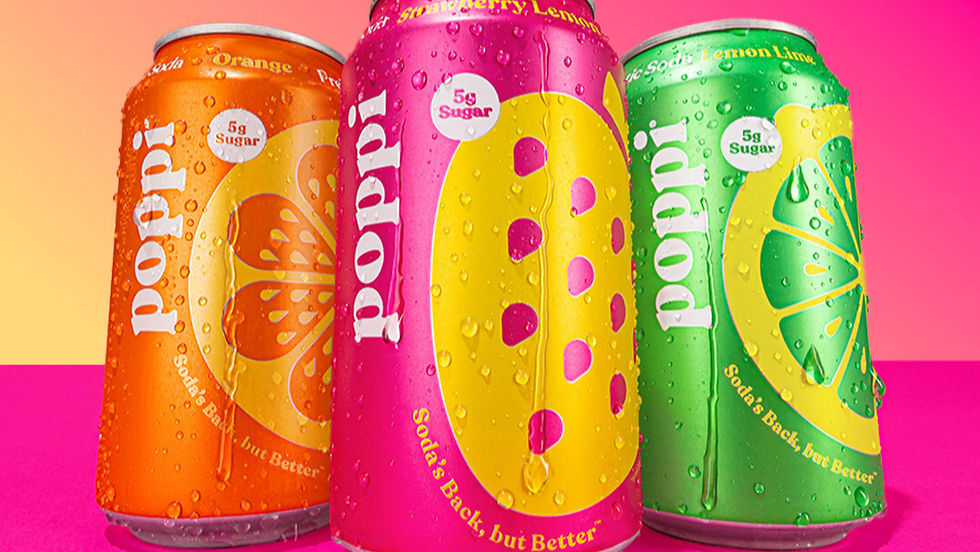
PepsiCo to acquire prebiotic soda brand Poppi for $1.95bn

PepsiCo announced a definitive agreement to acquire Poppi, a rapidly growing prebiotic soda brand, for approximately $1.95 billion.
This figure includes $300 million in anticipated cash tax benefits, resulting in a net purchase price of $1.65 billion. The deal also includes potential earnout considerations based on the achievement of specific performance milestones post-acquisition.
The acquisition is part of PepsiCo’s ongoing strategy to diversify its product portfolio and align with shifting consumer preferences toward healthier beverage options.
Red Bull, Rauch and Ball Corp to build $1.5bn beverage campus in North Carolina

Red Bull, Rauch North America and Ball Corporation are set to break ground on a $1.5 billion manufacturing and distribution campus at the former Philip Morris site in Concord, North Carolina.
This project, long awaited since its initial announcement in 2021, is poised to reshape the local economy and the beverage industry landscape.
The new facility, which will span nearly 2.4 million square feet, is expected to generate approximately 700 jobs, providing a substantial boost to the regional workforce.
Upon completion, the campus will have the capacity to produce up to 3 billion cans of Red Bull products annually, primarily catering to the US market while also supporting international distribution as and when needed.
Putin seizes control of AB InBev's Russian venture

Russian president Vladimir Putin has enacted a decree placing shares of AB InBev Russian joint venture under temporary management.
This action, announced in January on a government website, reflects the ongoing complexities faced by Western companies in navigating the Russian market amid geopolitical tensions.
In April 2022, AB InBev, the world's largest brewer by volume, announced its intention to divest from its Russian operations, aiming to transfer its interests to Turkish partner Anadolu Efes. However, this proposed transaction was blocked by Russian authorities earlier this year, leaving the multinational brewer in a precarious position.
Under the decree published in April 2023, Putin has the authority to assign management of companies to local entities, granting them control over assets without the right to sell them.
The decree specifically mentions the transfer of over 15.8 billion ordinary shares and nearly 93 million privileged shares in the AB InBev/Anadolu Efes venture to a group of companies known as Vmeste, which was established in Moscow in August 2024.
AB InBev's Russian operations, which include eleven breweries and three malt complexes, once commanded a 25% share of the Russian beer market with brands like Klinskoe and Spaten. But the sector has been grappling with declining consumption and increasing regulatory pressures, further exacerbated by the fallout from Russia's invasion of Ukraine.
This move follows a broader trend where the Russian government has seized assets from other multinational food and beverage firms attempting to withdraw from the country.