The latest news, trends, analysis, interviews and podcasts from the global food and beverage industry





Maldon Salt is facing questions over product provenance and consumer transparency following an investigation revealing that imported German rock salt is used in the production of its renowned Essex sea salt flakes.
The findings, reported by The Observer, challenge the traditional image of the 144-year-old British brand, which has built its international reputation around its coastal heritage, artisan production methods and distinctive pyramid-shaped salt crystals.
The investigation found that rock salt mined in Germany by salt producer K+S is delivered to Maldon Salt's production facility at Longwick Farm, near Goldhanger in Essex. The imported material is used in what the company describes as its long-established 'salt-on-salt' manufacturing process, in which rock salt is introduced to seawater drawn from the Blackwater Estuary to create a concentrated brine.
According to The Observer, journalists monitoring the production site witnessed deliveries of large bags of imported salt over a two-day period. The newspaper reported that the rock salt dissolves into the seawater during processing, meaning it becomes part of the resulting brine from which the finished flakes are produced.
The revelations have prompted questions about how the brand communicates the origins of its products, particularly given its longstanding marketing emphasis on salt harvested from the Essex coastline.
Established in 1882, Maldon Salt has become one of Britain's best-known premium seasoning brands. Its characteristic pyramid-shaped flakes are widely used by chefs, restaurants and home cooks as a finishing salt, with the brand benefiting from endorsements by prominent culinary figures and strong recognition across international food markets.
Its marketing has traditionally focused on the heritage of salt-making in Maldon, Essex, highlighting the Blackwater Estuary, traditional open-pan evaporation and the hand-harvesting of its distinctive crystals.
However, the investigation found that imported rock salt plays a role in the manufacturing process, despite the company's packaging and promotional material describing the product as '100% sea salt flakes'.
The company maintains that this description is accurate. Its position is that rock salt is essentially ancient sea salt, formed through the evaporation of prehistoric seas, and that its inclusion in the brine-making process does not change the identity or characteristics of the finished product.
The distinction is significant for a premium food brand whose commercial value is closely linked to its geographical heritage and traditional production story.
Following the investigation, Maldon Salt updated its website to provide greater detail about its manufacturing methods.
The company describes the process as a traditional technique that has been used for more than a century.
Seawater is collected from the Blackwater Estuary, typically during high tides when its natural salt concentration is at its greatest. The water is then settled and filtered, with rock salt introduced to enrich the brine and contribute natural minerals.
The resulting concentrated brine is transferred to open evaporation pans, where it is heated until salt crystals begin to form. These are subsequently harvested by hand and dried to create the brand's distinctive pyramid-shaped flakes.
Maldon argues that the process is fundamental to the characteristics of its finished product, maintaining that its signature texture, appearance and quality remain unchanged.
In a statement published on Instagram on 18 November, the company acknowledged that it had not explained its manufacturing process clearly enough.
It said: "We've heard your concerns that our process wasn't clear enough and are committed to being clear about how and why we make our salt the way we do."
The accompanying infographic outlined the four main stages of production: drawing seawater from the estuary at high tide, filtering it through a bed of pure rock salt to create brine, evaporating the brine in open pans and hand-harvesting the resulting flakes.
The company also sought to reassure customers that the product remains unchanged, stating that the salt available to consumers is "the same as it's always been".
The investigation has also brought renewed attention to the regulatory framework governing the description and marketing of sea salt in the UK.
Essex Trading Standards, supported by the Food Standards Agency (FSA), investigated Maldon Salt's production operations in 2019 and 2020.
Following inspections and sampling, the authorities concluded that no further action was necessary. The absence of a specific legal definition distinguishing sea salt from mined rock salt was a key factor in the regulatory assessment.
An Essex County Council Trading Standards spokesperson told The Observer that there were no specific legislative parameters to establish whether describing a product as sea salt was accurate or inaccurate.
Maldon Salt maintains that its production methods and product labelling comply with all applicable food safety and labelling legislation.
Nevertheless, the case raises broader questions about whether existing food labelling requirements provide sufficient clarity when products combine ingredients or raw materials from different geographical sources.
The issue also highlights differences between international markets. The investigation reported that some Maldon packaging sold in Canada has been changed to remove the word 'sea' from the product description. Canadian labelling requirements restrict the description of mined salt as sea salt.
The controversy is particularly relevant in the premium food market, where provenance, craftsmanship and authenticity can play a significant role in purchasing decisions.
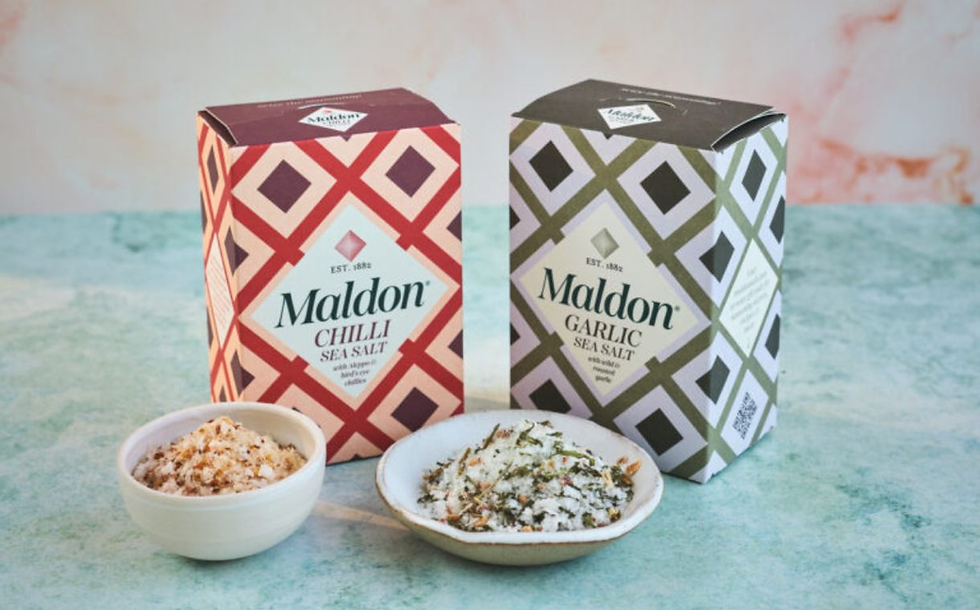
Maldon Sea Salt Flakes retail at approximately £2.85 for a 250g box, equivalent to £11.40 per kilogram, according to the pricing cited in the investigation. This represents a considerable premium compared with mainstream table and rock salt products.
While the price difference reflects more than the raw material alone, including processing, packaging, brand positioning and the distinctive characteristics of the finished flakes, the revelations may prompt consumers to reconsider what they are paying for.
Maldon Salt has defended its traditional production methods and maintains that its product quality and characteristics have not changed.