The latest news, trends, analysis, interviews and podcasts from the global food and beverage industry


Functionality and ‘flexitarianism’ are driving innovation in plant-based dairy – a category valued at $22.7 billion globally in 2025, led predominantly by the booming milk alternatives segment according to Euromonitor. As the industry works to bolster its resilience in the face of challenges such as labelling legislation and sensory hurdles, this exclusive feature from FoodBev Media's The Plant Base magazine takes a deep dive into the current state of the market.
Though volume growth in the plant-based dairy sector has slowed in recent years, demand remains strong – particularly within milk alternatives, which have become the most mature segment within the category. Rising adoption of ‘flexitarian’ diets has led to significant market penetration within this subcategory.
Analysis of Euromonitor data by the Good Food Institute highlights that the Asia Pacific region was estimated to account for over one-third of plant-based dairy sales in 2025, followed by Europe and North America.
Meanwhile, research from ADM’s Global Protein Discovery Report last year found that 78% of global ‘plant-forward’ consumers (defined as flexitarians, vegetarians or vegans) have tried dairy alternatives, and 88% consume them at least weekly. Trial rates were found to be highest in Brazil (85%) and Australia (83%), followed by the US and UK (78%), South Korea (76%) and Germany (68%).
Robin Redelin, senior category marketing manager for dairy and plant-based dairy at ADM, said that demand is evolving beyond an “all or nothing” mindset.
“Consumers are increasingly flexitarian, seeking both plant- and animal-based proteins, and they’re prioritising higher protein intake,” he told The Plant Base. “Health remains a leading driver, alongside growing expectations for better taste and texture.”
Caroline Cotto, director of alt-protein non-profit organisation Nectar, commented: “What we’re seeing in the data is that demand is strongest where products deliver on a familiar use case and a familiar sensory experience. Barista milk, creamers and milk are the clearest examples of that.”
“The category is becoming less about novelty and more about everyday replacement, which is where real volume growth comes from.”
In comparison to meat alternatives – another plant-based food category that has matured significantly and plateaued after its initial boom around 2020 – Cotto noted that alt-dairy is currently “in a stronger position in terms of purchase intent and sensory progress.”
“In our research, plant-based dairy outperformed plant-based meat on purchase intent, and that’s partly because the category has more clearly solved certain everyday occasions, especially beverages and breakfast moments,” she pointed out.
“I think the reason is simple: dairy is a more modular system. Consumers can try a plant-based milk in coffee without changing the whole meal, and have easier access to try products at a coffee shop, which makes experimentation easier. Meat alternatives often have to carry more of the culinary and cultural burden of the entire plate, so the sensory bar is even higher. That said, from a market penetration standpoint, our highest performers in both sectors are on pace with one another.”
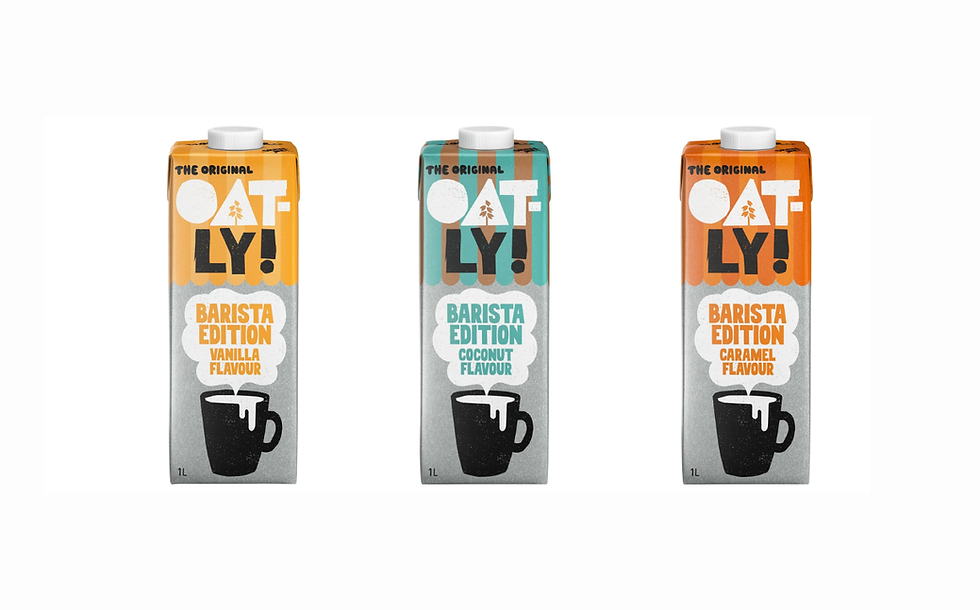
Swedish oat milk brand Oatly, one of the leading milk alternative brands in Europe, has reported growth in the UK from both new shoppers and existing shoppers buying increased quantities. Bryan Carroll, general manager for UK and Ireland, described plant-based milk as the “engine of the category,” accounting for 53% of total plant-based dairy market value.
“Plant-based milks tend to be the most widely adopted product within the category and usually act as a first step for consumers entering the plant-based space,” he explained. “From iced drinks to matcha and beyond, we are seeing how new taste experiences, both in and out of homes, are leading to increased demand.”

Flavour trends and functionality
Trends around indulgence, nostalgia and global influence are shaping flavour innovation and product development in the dairy alternatives category.
ADM’s Redelin said: “Classic profiles like vanilla and strawberry continue to resonate, as consumers associate dairy with comfort and familiarity, especially its creamy texture. At the same time, elevated twists on classics like salted caramel and lemon cheesecake flavours are gaining traction, particularly in yogurts and frozen formats.”
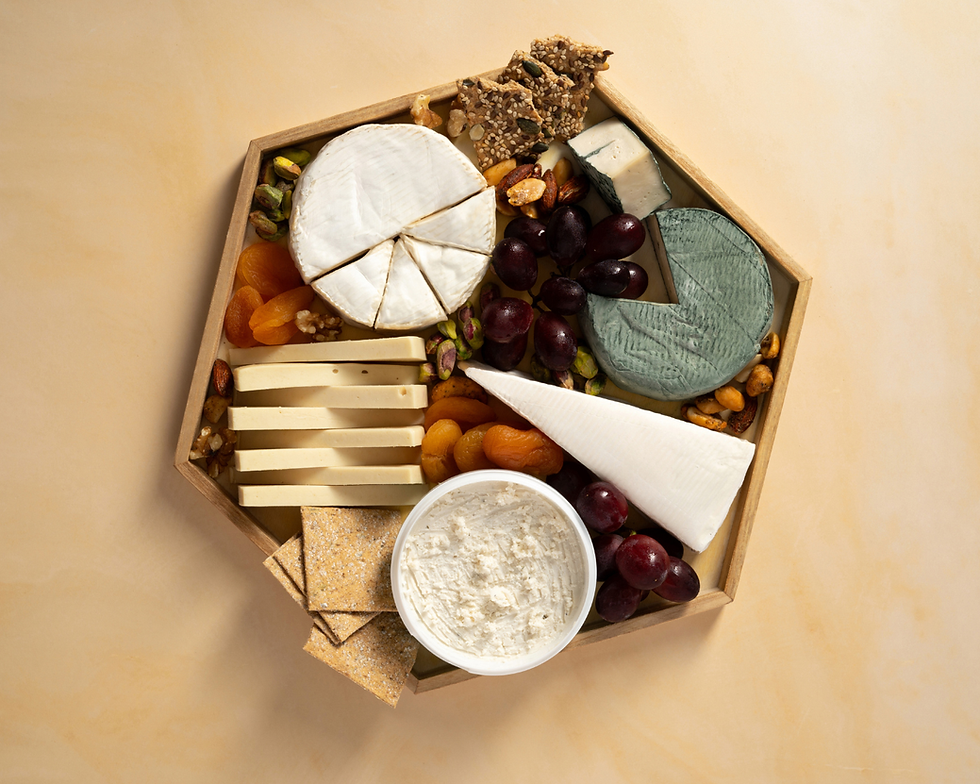
In cheese, British dairy-free cheese brand Honestly Tasty’s CEO, Mike Moore, noted the demand for authentic fermented flavours.
“Consumer palates have been shaped by sourdough, kimchi, kefir and the like, and those expectations are carrying over into plant-based cheese,” he highlighted. “Complexity, depth and provenance are becoming genuine differentiators, and that feels like our territory.”
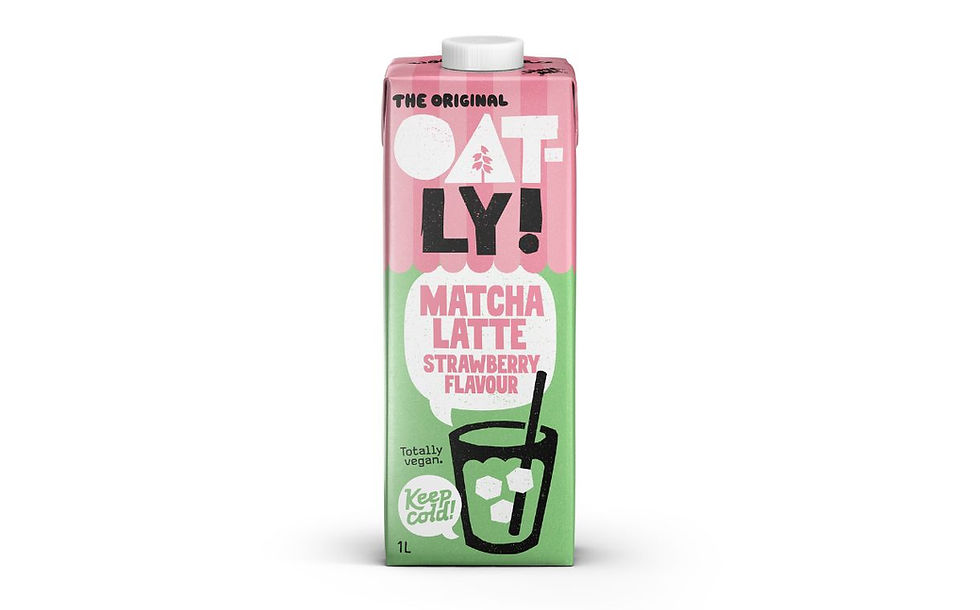
Global flavours have increasingly been garnering attention, with East and Southeast Asian flavours proving popular in the West. Oatly identified this among its recent Future of Taste report, noting the rise of matcha, ube, calamansi, pandan and yuzu. Matcha in particular has exploded in popularity over the last year – Oatly tapped into this rising demand with the UK launch of its Matcha Latte Oat Drink in July 2025, and recently expanded the line to include a Strawberry Matcha Latte variety.
Califia Farms also experimented with flavour innovation in this category with its Blueberry Matcha Almond Latte, launched in May 2026, while Sproud and Danone’s Alpro have both entered the RTD matcha category this year with options made from yellow peas and soya-coconut, respectively.
Elsewhere, in non-dairy yogurt, ADM’s Redelin said that fruity flavours like raspberry and blueberry, alongside tropical and citrus flavours such as passionfruit, dragon fruit and yuzu, are garnering interest.
“These profiles align with consumer perceptions of vitamin C and immune support, reinforcing yogurt’s existing health halo,” he added.
Nutrition and functionality are major drivers, with ADM’s research finding that nearly 40% of plant-forward consumers are interested in seeing enhanced health benefits from future plant-based options. High-protein options are dominating, with many consumers prioritising protein consumption across food and beverage more broadly.
“The resurgence of high-protein dairy – cottage cheese being the obvious example – has caught consumers’ attention and shone a light on where plant-based cheese currently falls short,” said Honestly Tasty’s Moore.
“For some cheeses, we’re actively exploring formulations that bring protein levels up meaningfully without sacrificing the taste and texture…it’s a tricky technical challenge, as higher protein content tends to affect mouthfeel, but we’re making progress and think it’ll prove to be a real area of differentiation for us.”
Gut health is also fuelling growing interest in health-led alt-dairy innovations, with an increasing number of gut health claims appearing on shelves – particularly in yogurt and beverages.
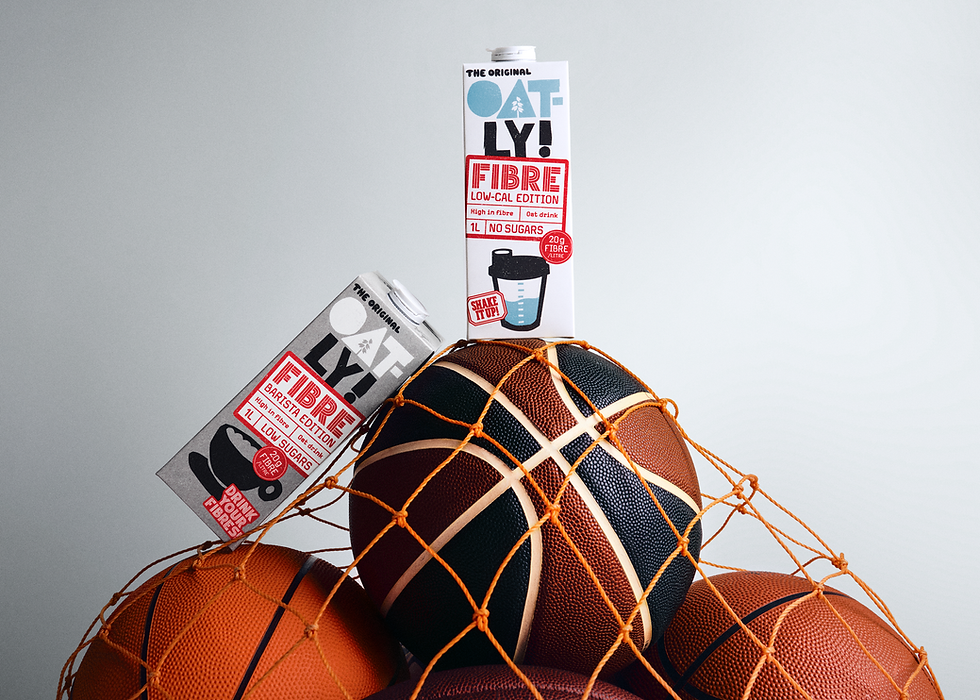
“This is fuelling demand for pre, pro and postbiotics, as well as dietary fibre,” said ADM’s Redelin. “Globally, 69% of consumers actively seek to increase fibre intake.”
The Coconut Collab tapped into this interest with the launch of a dairy-free kefir drink this spring, made by fermenting coconut water and coconut milk to create a ‘creamy and tangy’ drink. It includes vitamins D, B6 and B16, and offers a source of fibre alongside ‘billions’ of live bacteria.
The product builds on the success of the brand’s Gut Health Yog, launched in 2022, which has seen 57% growth in the last year.
Joe Farrar, marketing manager at The Coconut Collab, said fibre has emerged as an increasingly relevant trend. “Over 60% of our shoppers are looking to incorporate more fibre into their diets, with 96% of the UK not getting the recommended 30g of fibre a day.”
“While most dairy products are reflected quite well in the dairy-free space, kefir hasn’t had the same love,” he added, noting that the combination of kefir’s distinct tangy flavour and the gut health benefits are a notable technical challenge in dairy-free.

The taste opportunity
A significant challenge for the dairy-free category is enhancing taste and texture – this was explored in Nectar’s recent Taste of the Industry report for 2026. Built on what is claimed to be the most comprehensive public sensory analysis of dairy alternatives to date, the report found that milk and creamer-style products are leading the way in ‘taste parity,’ while ice cream and cheese were the furthest behind.
“Melt, stretch, browning, firmness, creaminess, and even the way a cheese behaves on the palate all matter at once,” said Nectar’s Cotto. “If one of those elements is off, people immediately notice. Milk and creamer can succeed with a narrower set of sensory cues, but cheese must do much more.”
Of all cheese types, mozzarella and cheddar-style products performed the worst in Nectar’s analysis – particularly on stretch, melt, stickiness and gumminess.
“Casein is the critical component that dairy-free cheese struggles to replicate, especially for cheeses like mozzarella,” Cotto noted, adding that when dairy-free cheese makers solve this, she’s optimistic about improvement. “The promising news is that there’s a plethora of companies working to solve this challenge with animal-free casein, like Formo, New Culture and Standing Ovation.”
Despite these challenges, plant-based cheese is a “younger” category compared to alt meat, with “substantial room for innovation,” acknowledged Natasha Linhart, founder and CEO of food group Atlante.
“The greatest opportunities lie in hard cheese alternatives and spreads, where technology is making significant leaps forward. We also see strong potential in ready-to-use products, such as grated and sliced options, which simplify the transition to plant-based for everyday consumption.”
Shifting consumer perceptions is also a factor. Honestly Tasty’s Ailis Anderson, head of brand and marketing, said: “Plant-based cheese, especially at the artisanal end of the market, continues to improve but so many consumers are still drawing on experiences from five or ten years ago – when the products really weren’t good enough”.
“Alongside that are barriers to re-entry: price and availability chief among them, meaning a lot of people never get the chance to update that view… Breaking that cycle requires getting great products in front of people in low-friction ways… sampling, foodservice, gifting, so that the experience does the talking rather than the marketing.”
Ice cream was another category that struggled to meet taste expectations – consumers expect creamy, premium mouthfeel and slow melt rate found in traditional dairy, KTC Oils’ head of business development and sustainability, Gary Lewis, highlighted.
“To achieve this, manufacturers are increasingly turning to specific, high-performance edible oils, notably palm and coconut, to create bespoke blends that effectively replicate the structural integrity and sensory experience of milk fat.”
“By using bespoke vegetable oil blends, manufacturers can access a range of melting curves tailored precisely to mimic dairy fats, ensuring the alternative ice cream behaves correctly both in production and in the consumer’s bowl or cone. This same principle applies to vegan cheese, where specific fat blends are crucial for achieving the perfect melt and stretch.”

Tackling industry challenges
When sourcing oils and fats, manufacturers must keep transparency and traceability in mind – demand for clean labels and ethical ingredients is high, especially in the plant-based food category.
KTC’s Lewis warns against “the temptation of cheap, untraceable commodity oils,” placing emphasis on sourcing ingredients backed by recognised certifications, such as RSPO-certified palm oil.
Sourcing high-quality and sustainable blends that perform consistently is a key R&D hurdle for many teams, he noted.
“The era of relying on untraceable ‘mass balance’ commodity oils will end, driven by tightening regulations like the EUDR and the UK’s Forest Risk Commodity Regulation.”
Additionally, current geopolitical instability has led to volatility across the wider food and beverage industry, alt-dairy included. “It was already looking difficult for food prices this year, due to the increased costs for business, with inflation forecast to rise even before the US attacks on Iran,” Lewis said.
“The resulting economic chaos from rallying crude oil prices, as well as other commodities, is having wide-ranging impacts, including the cost of transport and fertiliser, and will add inflationary pressures to an already fragile economy.”
Labelling legislation is another area continuing to impact businesses, with restriction of dairy-related terms requiring companies to innovate around the marketing and branding language used. As Oatly discovered earlier this year, these restrictions – which prohibit the use of dairy words like ‘milk’ and ‘yogurt’ in marketing – reinforce that trademarks may still fall within the scope of regulatory restrictions, even if the dairy-related words are not being used to describe the product itself.
In February, the UK Supreme Court ruled that Oatly’s use of the slogan ‘Post Milk Generation’ is invalid for use across its food and beverage products in the UK. This was the culmination of a long-running legal battle since British dairy farming association Dairy UK first objected to the slogan in 2021.
Oatly’s Carroll told The Plant Base: “We believe that the Supreme Court ruling against Oatly earlier this year creates unnecessary confusion and an uneven playing field for the plant-based industry.
Consumers already understand what oat drink is, and we continue to grow despite not having called it milk for many years – while dairy milk sales are in decline.”
Similarly to the introduction of labelling restrictions in the plant-based meat category, which are tightening across the EU, animal agriculture organisations argue that the regulations prevent consumer confusion. However, many players across the plant-based food and beverage industry dispute this, maintaining that comparison to traditional dairy counterparts helps consumers identify plant-based alternatives to familiar products.
Honestly Tasty’s Anderson commented: “For brands like ours that use playful, self-aware language ‘Shamembert’ is a good example – there’s real uncertainty about what might not be permissible one day”.
“The irony is that our naming conventions are clearly communicating what the product isn’t, not misleading anyone. Consumers understand perfectly well that ‘La Fauxmagerie,’ [the plant-based cheese brand acquired by Honestly Tasty this year], isn’t a traditional fromagerie and we don’t shy away from using terms like vegan, plant-based and dairy-free on-pack.”

What’s next?
To attract more consumers to the category, enhancing sensory experience and addressing affordability barriers will remain key.
Atlante’s Linhart said this will help make products “a rewarding culinary choice for everyone, not just those with specific dietary regimes”.
“In the next five years, I predict a significant qualitative consolidation of the category,” she said. “We will see greater segmentation of the offering, with products increasingly targeted at specific gastronomic needs.”
Nectar’s Cotto agrees with this segmentation piece, adding that as the category becomes more sophisticated, already-strong categories like milk, barista milk and creamers will edge even closer to parity, increasingly becoming the default option in many contexts.
“Others, especially cheese, will require more scientific breakthroughs before they truly scale,” she said. “My bigger prediction is that the market will reward specificity. Brands that understand exactly which sensory attributes matter for which occasion will outperform brands trying to be everything to everyone.”
The demand for new taste experiences is driving new product development across the category, particularly in areas such as matcha and barista-grade drinks – Oatly’s Carroll sees huge potential here. New offerings such as the brand’s recently launched Cold Foam, developed to meet demand for vegan-friendly premium cold coffee drinks in foodservice, can bring further appeal to the market.
“Price parity is also critical to continued market growth,” said Nectar’s Cotto. “Even a 25% price premium over traditional dairy prices out about half of potential buyers.”
“If brands focus on the use cases where they are already winning, and invest more in the categories where texture and flavour still lag, they can build trust faster…Over the next five years, the winners will be the products that are not just plant-based, but genuinely better designed for how people actually eat and drink.”