The latest news, trends, analysis, interviews and podcasts from the global food and beverage industry


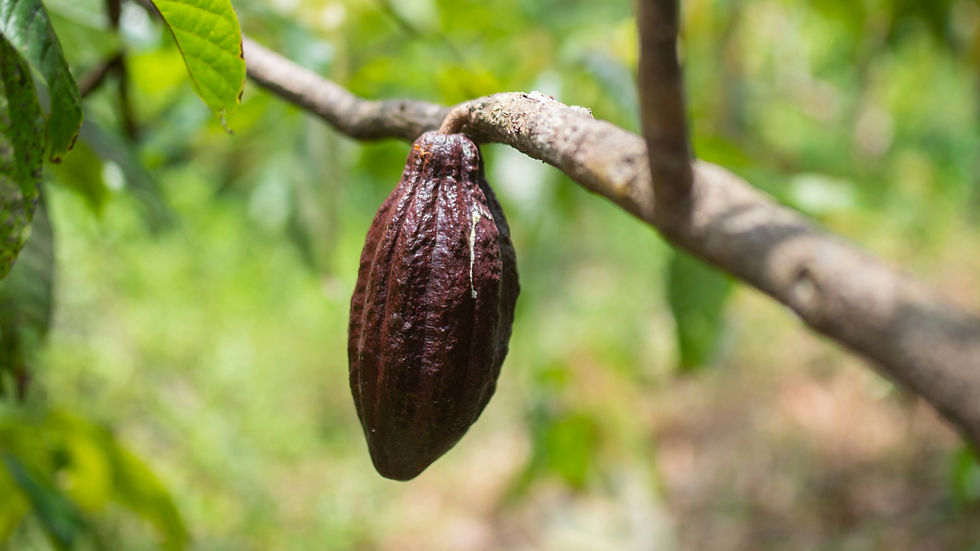
Agri-tech start-up AgroNetica has announced plans to advance toward commercial deployment of a transgene-free, gene-edited cacao with improved disease resistance, aiming to tackle one of the cocoa supply chain’s biggest challenges.
AgroNetica is a US-based subsidiary of BetterSeeds, an agri-tech company headquartered in Israel. It was established based on BetterSeeds’ second-generation gene editing platform, adapting the technology to cacao specifically.
According to the company, its gene-edited cacao has improved resistance to Phytophthora, the pathogen responsible for black pod disease.
Its work builds on research conducted by scientists in Penn State University’s Department of Plant Science. In controlled disease assays, the transgene-free edited cacao plants reportedly showed approximately 42% less disease damage following Phytophthora infection.
The edited trait was successfully transmitted to the next generation, paving the way for multiplication and commercial planting material, AgroNetica highlighted.
Climate change and disease have put significant pressure on the chocolate industry. African cacao-producing countries, which account for more than 60% of the global cacao supply, expect a major production decline through 2027.
Experts have cited the impact of the strengthening El Niño weather event, which occurs due to warming ocean temperatures in the central and eastern Pacific, as well as disease risk. With cocoa prices remaining well above pre-crisis levels, AgroNetica noted the chocolate industry’s need for cacao genetics capable of maintaining yields under harsher growing conditions.
Ido Margalit, CEO of BetterSeeds and AgroNetica, said: “The cocoa industry does not only have a supply problem – it has a plant problem”.
“Disease, heat and drought all begin at the farm. Our objective is to use gene editing to build cacao trees that can perform better under the conditions growers are facing today and will face in the years ahead.”
BetterSeeds has already developed, patented and implemented its second-generation technologies and trait solutions in other crops. Relevant existing capabilities include heat and drought tolerance, improved yield and agronomic performance, accelerated maturation, plant architecture and synchronised pod formation for more efficient and mechanised harvesting.
Additionally, ArgoNetica is planning more cacao-specific traits, including reduced heavy metal uptake and caffeine-free varieties.
Conventional breeding can require decades to introduce and validate new traits, as cacao trees take years to mature. By combining an advanced disease-resistant cacao line with BetterSeeds’ technologies, AgroNetica believes it can substantially shorten the timeline.
Field validation, multiplication and commercial development are the immediate focus, with commercial stages targeted during 2027.
Notably, AgroNetica also aims for improved economics and ethics of cacao production – which is linked to sustainability and social responsibility challenges around deforestation and child labour.
When disease, drought and heat reduce yields, farmers face less pressure to produce more from additional land. More productive and resilient cacao trees can help growers produce more from land already under cultivation and reduce the economic pressure to expand into new forests, the company noted.
This is particularly relevant as the EU Deforestation Regulation begins applying to large and medium operators on 30 December 2026, with cocoa that enters the EU subject to deforestation-free requirements.
Additionally, healthier trees, lower crop losses, stronger yields and more efficient harvesting can improve farm productivity and income. AgroNetica hopes this will contribute toward addressing some of the economic pressures that lead to the use of child labour in cacao-growing communities.
In June 2026, the EU adopted a new framework for plants developed using new genomic techniques, such as gene editing. AgroNetica believes that evolving regulatory approaches in Europe and other markets will support gene-edited cacao in moving from research into real agricultural use.
The company is pursuing collaborations and joint ventures with chocolate manufacturers, processors, growers and other stakeholders across the cacao value chain.
Margalit commented: “The industry has made enormous progress in tracing and measuring the sustainability and ethical challenges around cacao. We believe the next step is to improve the plant itself - so growers can ethically produce more reliably, on existing land, with fewer losses and a stronger economic foundation.”