The latest news, trends, analysis, interviews and podcasts from the global food and beverage industry

Search this site
12012 results found with an empty search
- Tetra Pak inaugurates 120m euro carton packaging site in Vietnam
Tetra Pak has opened an aseptic carton packaging factory in Vietnam following an investment of €120 million. Located in Binh Duong province, north of Ho Chi Minh City, the site marks Tetra Pak’s eighth factory in the Asia Pacific region and will serve both the domestic and export markets. The factory has an expandable capacity of 20 billion packs per annum and currently produces the Tetra Brik Aseptic and Tetra Fino Aseptic packages. There is the possibility of producing more packaging formats from the facility in the future. “This greenfield investment is a strong testimony of our long-term commitment to Vietnam, contributing to the nation’s economic development, generating employment opportunities and boosting the local industry,” said Adolfo Orive, president and CEO of Tetra Pak. “This factory is not just a monetary investment for us. It reflects our pledge to be closer to our customers, to serve them faster and better, with greater flexibility and efficiency, and shorter lead times.” According to Tetra Pak, the liquid food market in Vietnam has been growing at a 6% CAGR for the last three years and is projected to grow at a similar pace during the next three years. Jeffrey Fielkow, managing director for Tetra Pak Vietnam, said: “This is a proud moment for us, which coincides with yet another historical milestone, as we celebrate the completion of 25 years of Tetra Pak’s presence in Vietnam. “With the new factory, we feel even more strongly connected to Vietnam and our customers, and even more confident of shaping the future of the industry, together.”
- Insight: Combating global food crises with edible insects
A study by the University of Leeds, UK, and the University of Veracruz in Mexico, has found that the techniques of producing edible insect products should be geared towards the preferences of younger generations. With a strong focus on commercialisation and processing, this could then pave the way for the normalisation of consuming insects as an alternative form of protein intake. Study author Dr Alan-Javier Hernández-Álvarez, from the School of Food Science and Nutrition at Leeds, said: “Edible insects are fascinating. Although humans have eaten insects throughout history, and approximately two billion people around the globe regularly eat them today, research on the subject is relatively new. “Edible insects could be the solution to the problem of how to meet the growing global demand for food in a sustainable way.” He continued: “In some European countries, consumers, particularly young adults, have shown interest in new food products that use insects in un-recognisable forms, such as flour or powder used in cookies or energy drinks. “Developing efficient large-scale processing technologies that can develop insect powders could go a long way to helping introduce insects as a common source of protein and nutrients.” Younger generations are more likely to be open to new experiences when it comes to food and beverage choices, with a surge in consumers opting for alternative diets such as flexitarianism and veganism. “Promoting insects as an environmentally sustainable protein source appeals to the current attitudes in the younger generation,” said study author Dr Guiomar Melgar-Lalanne, from the University of Veracruz. “Another successful strategy involves serving insects as snacks between meals, which would increase inclusion of insects in daily diets. These types of snacks are increasing in popularity in the global market.” The cultivation of insects for food produce takes up less physical space than traditional meat farming. The study also indicated that for insect-based products to become a completely viable industry, the appropriate technology and resources must be developed for the leap into indoor farming to meet demand. Hernández-Álvarez noted: “Food is only the tip of the iceberg for insects’ sustainable potential. “Refining extraction technologies could make insects a feasible and sustainable option for replacing some currently available functional ingredients. These aspects should be a focus of future research and technological development.”
- Pimm’s collaborates with Duerr’s to release new fruity preserve
Diageo-owned Pimm’s has partnered with jam manufacturer Duerr’s to create a new preserve in time for summer in the UK. The jam combines the gin-based Pimm’s No.1 beverage with strawberries, tangerines and a hint of mint. Pimm’s said the sweet treat can be added to scones for a new way to enjoy afternoon tea or as a new spin on Victoria sponge cake. Lizzy Forster, senior brand manager, Pimm’s, said: “Pimm’s and jam are both iconic British traditions, and we’re thrilled to bring them both together with our new fruity preserve. “The jam is the ideal way to add a taste of summer to any occasion – simply dollop generously onto scones with lashings of clotted cream.” The preserve contains 4% Pimm’s No.1, a 25% ABV drink created by infusing gin with herbal botanicals, caramelised orange and delicate spices. Waitrose and Asda stores in the UK are now stocking the jam, which has recommended retail price of £2.49 for 330g jars. The release follows last year's limited-edition launch of Pimm’s ice lollies, which had an ABV of 4.3%.
- EFBW calls for improvements in plastic collection infrastructure
The European Federation of Bottled Waters (EFBW) has called on European authorities to enhance the performance of collection and sorting systems for beverage containers, in order to ensure the availability of high-quality recycled PET (rPET) in the EU. Last year, EFBW members committed to collecting 90% of all PET bottles by 2025 as an EU average, ensuring that discarded plastic containers can be converted into rPET. The EU also approved the implementation of the Single Use Plastics Directive in May, which set a 90% separate collection target for plastic beverage bottles by 2029. However, according to the EFBW, the current collection level of PET beverage bottles still varies substantially across the EU despite efforts to establish and finance packaging recovery organisations. If current systems do not improve, the federation warns that this could make it more difficult for bottled water manufacturers to incorporate recycled rPET into their bottles. To include recycled PET in their packaging, bottled water producers require access to a consistent supply of high-quality, food contact, recycled material, and thus the collection of PET bottles is a high priority of plastic bottle manufacturers. The EFBW has now endorsed the widespread adoption of deposit return schemes by European authorities as a way of boosting PET recycling rates, claiming that deposit return schemes "have the benefit of yielding very high return rates in a separate 'clean' stream for PET beverage bottles." Another way forward suggested by the EFBW is the improvement of existing curbside collection systems, claiming that this could also significantly boost PET recycling rates. Jean-Pierre Deffis, EFBW president said: “We call on all value chain actors to partner with us on this journey towards greater circularity of PET in Europe." Deffis recently spoke at the Food & Beverage Innovation Forum in Hangzhou, China, stating that the bottled water industry has "very big challenges in terms of circular economy and especially about packaging. We are under criticism about the packaging because we are using a lot of plastic bottles.” He added: “We think the best solution is not to get rid of the bottled water but get rid of poor results in terms of collection. Because if our bottles are not well-collected then we can’t recycle the bottles and we have a lot of waste. The big debate is how to improve these collection rates.”
- Fentimans expands rum mixer portfolio with new Tropical Soda
Fentimans has launched a new pineapple-flavoured mixer in the UK that is designed to be paired with rum. Called Tropical Soda, the beverage is balanced with a “subtle spicy, savoury cardamom note” and has been created to offer consumers an alternative rum mixer to cola and ginger drinks. Tropical Soda joins the Fentimans range of rum mixers including Curiosity Cola, Ginger Beer and Ginger Ale. The UK drinks maker developed the beverage in partnership with the Fentimans Botanical Collective, a group of bartenders from cocktail bars across Europe. Joe Hall, bar manager at London bar Satan’s Whiskers, said: “Working with Fentimans to create Tropical Soda has been an incredibly rewarding experience. Combining our varied on-trade acumen with their clear mastery of craft has resulted in an objectively delicious product that, we feel, fills a real gap in the market. “Whether in mixers or cocktails, I’m now excited to sit back and observe how it flourishes within the industry.” Last month, Fentimans announced the launch of a pink ginger beverage as an alternative to ginger beer.
- Budweiser overtakes Bud Light as world’s most valuable beer brand
Budweiser has claimed the top spot as the world’s most valuable beer brand for the first time, overtaking Bud Light, according to a new report by brand valuation consultancy Brand Finance. Following the success of its 2018 Fifa World Cup sponsorship campaign, Budweiser’s brand value increased 6% from 2018 to reach $7.5 billion. The campaign, the brand’s most expensive to date, reached 3.2 billion football fans globally, facilitating accelerated growth in markets such as South Africa, Colombia, China and Australia. However, according to Brand Finance, both Budweiser and Bud Light – the flagship beer brands of AB InBev – have seen a slowdown in brand value growth compared to previous years, in part due to declining beer consumption among millennials. The AB InBev portfolio still dominates the rankings, however, with 11 brands claiming spots in the top 25, down from 13 last year. China’s Snow is the fastest-growing brand in this year’s Brand Finance Beers 25 ranking and has broken into the top ten for the first time, with a 52% rise in brand value to $3.7 billion. Snow is the best-selling beer in the world, clocking up 101.2 million hectolitres of beer sold per year, more than double that of Budweiser’s sales. The brand, which historically has only been sold in China, has made a number of strategic partnerships in order to raise its global presence, notably with Heineken and Molson Coors. Tsingtao (up 49% to $1.7 billion) jumped up nine places in the ranking, more than any other brand. David Haigh, CEO of Brand Finance, said: “As you can see across this year’s ranking, it is the Asian, particularly Chinese, beer brands that are seeing the highest brand value growth. With demand for beer at an all-time high in China and predictions of inflated growth over the coming years as a result of greater disposable income from the emerging middle class, this trend looks set to continue. “If these brands begin to expand beyond China and into new markets, we could potentially see some very stiff competition to established Western beer brands.” Meanwhile, Scottish craft beer brand BrewDog is the highest new entrant in the ranking in 19th position, with a brand value of $1.5 billion. Now 11 years old, the brand is undertaking ambitious growth plans across key international markets, with new breweries and bars in the pipeline both at home in the UK and abroad. Last year, BrewDog announced its foray into the hotels business, opening the doors to what it described as the world’s first craft beer hotel, The DogHouse.
- Pladis adds to Flipz range in UK with new salted caramel pretzels
Pladis has expanded its Flipz line of pretzels in the UK with a new salted caramel variant as it looks to grow in the sweet and savoury snacking segment. Flipz Salted Caramel features salty and sweet pretzel snacks enrobed in a salted caramel coating. The introduction aims to unlock further sales opportunities among younger consumers and families. Pladis said it is also looking to appeal to the one in six UK consumers who are interested in savoury snacks with chocolate. “Flipz Salted Caramel offers a moreish, sweet and savoury taste with a delicious, on-trend salted caramel twist,” said Sarah Horowitz, director of new ventures at Pladis UK&I. “It is an absolute must-stock for retailers looking to unlock the £1.2 billion opportunity that the snacking category presents – and we believe Flipz Salted Caramel will be the sweet treat that families and friends alike will be reaching for during days out, nights in and everything in-between. “We already know how popular Flipz has been in the UK, and with £500 now spent on snack foods every second, there’s no let-up in the demand for on-the-go and sharing snacks. We look forward to enticing even more consumers with our latest exciting flavour innovation.” Flipz Salted Caramel is available in 90g pouches with a recommended retail price of £1.50. Earlier this month, Pladis expanded its McVitie’s Jaffa Cakes portfolio in the UK with limited-edition pineapple cake bars. In December, Pladis UK & Ireland announced plans to make all its plastic packaging recyclable, reusable or compostable by 2025.
- World Dairy Innovation Awards 2019 winners revealed
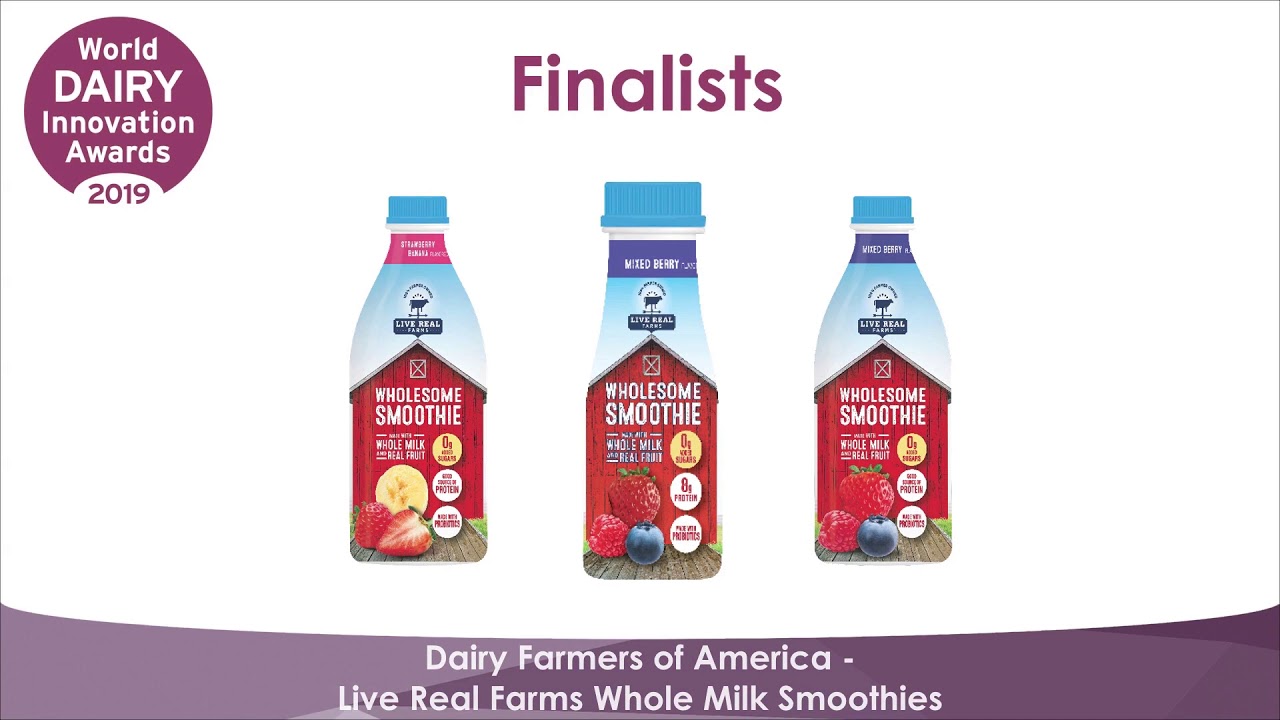
The full presentation of winners and finalists from the World Dairy Innovation Awards 2019, as presented at the 13th Global Dairy Congress in Lisbon, Portugal. Best allergy-friendly dairy or dairy alternative product WINNER Heilongjiang Yeeper Dairy Group - Bekari Growing-up Formula Sheep Milk Powder FINALIST ALDI - Friendly Farms Almond Milk Coffee Creamers FINALIST ALDI - Friendly Farms Almond Nog Best brand extension or reformulation WINNER Icelandic Provisions - Krímí Skyr FINALIST ALDI -Specially Selected Gourmet Cream Cheese Rolls FINALIST Inner Mongolia Yili - Satine Jersey Pure Milk FINALIST Oakhurst - Whole Coffee Best butter/dairy spread WINNER Agropur - Natrel Whipped Cottage Cheese Dip FINALIST Darling Pickle Dips - Cream Cheese Spreads FINALIST Lewis Road Creamery - Grass-Fed Traditionally Churned Butter (Lightly Salted) Best cheese WINNER Grandvewe Cheeses - Gin Herbalist FINALIST Brownes Dairy - Vintage Cheese FINALIST Meiji - Tokachi Smart Cheese with Dashi FINALIST The Creamery - Signature Cheese Curds Best children's dairy WINNER Junlebao Dairy - LePlatinum K2 Growing-up Milk Formula FINALIST Brownes Dairy - The Wiggles Yoghurt Pouches FINALIST Inner Mongolia Yili - Cute Star Natural DHA Pure Milk Best dairy alternative WINNER Happy Cheeze GmbH - Happy White: The Camembert Alternative FINALIST Ardagh - Minor Figures Oatmilk Latte Nitro FINALIST Qwrkee Foods – Plant-Based Pea Milk Best dairy dessert WINNER Nightfood - Nightfood Ice Cream FINALIST ALDI - Specially Selected Italian Ice Cream Cups FINALIST Nanyang Polytechnic - Mixed Berry Pudding Yogurt Drink FINALIST National Dairy Development Board India - Dahi-Based Fusion Best dairy drink WINNER Hartshorn Distillery - Sheep Whey Vodka FINALIST Biotiful Dairy - Cacao Kefir FINALIST Darigold - FIT FINALIST Lewis Road Creamery - Chocolate Milk FINALIST Oakhurst - Wild Blueberry Milk Best dairy ingredient WINNER Chr. Hansen - Sweety Y-1 Culture FINALIST Arla Foods Ingredients - Infant Formula Ingredient Lacprodan and MFGM-10 FINALIST FrieslandCampina Ingredients - Nutri Whey Isolate Clear FINALIST Sensient Technologies - Non-Dairy Protein Masking Best dairy snack WINNER siggi’s - Simple Sides FINALIST Biotiful Diary - Kefir Quark Black Cherry Compote FINALIST Sargento Foods - Sunrise Balanced Breaks FINALIST Yaar Bar – Cloudberry Yaar Bar Best dairy parlour innovation WINNER Yoghurt Barn - Yoghurt Parlour FINALIST Danone Argentina S.A. - La Serenisima Original Best dairy protein product WINNER Bam Life - Bam Organic FINALIST Belle Chevre - New High-Protein Cream Cheese FINALIST FrieslandCampina Ingredients - Nutri Whey Isolate Clear Best functional dairy WINNER Grandvewe Cheeses - Fresh Curd with Probiotics FINALIST Dairy Farmers of America - Live Real Farms Whole Milk Smoothies FINALIST Junlebao Dairy - LePlatinum K2 Growing-up Milk Formula FINALIST Meiji - Probio Yogurt PA-3 Best ice cream/frozen yogurt WINNER Nightfood - Nightfood Ice Cream FINALIST Meiji - Essel Sweets Ice Cream Dessert FINALIST Steve's Ice Cream - Steve's Ice Cream Best infant nutrition WINNER Löwenzahn Organics - Infant Formula FINALIST Feihe Dairy Co - AstroBaby FINALIST Heilongjiang Yeeper Dairy - Huifu Growing-up Formula Milk Powder Best machinery/equipment innovation WINNER Cheese Grotto - the wine cellar for cheese FINALIST Feihe Dairy Co - AstroBaby Precise Batching System Best manufacturing/processing innovation WINNER Junlebao Dairy - VITARESH INF009S Technology FINALIST Dairy Farmers of America - GoPro Camera Installation at Scale FINALIST Feihe Dairy Co - Instant Dissolve AstroBaby Formula FINALIST Junlebao Dairy - Banner Zhiqin Toddler Formula “Zero-distance" Integrated Technology Best marketing campaign or initiative WINNER Les Producteurs de lait du Québec - Solide Liquide 2018 FINALIST Brownes Dairy - The Gift of Giving Christmas Campaign FINALIST Dairy Farmers of America - Mud Season Milk FINALIST Yili Group - Leading the Future of Chinese Dairy Industry Marketing Campaign Best new brand/business WINNER Yaar Bars – Yaar Bars FINALIST Dairy Farmers of America - Craig’s Creamery FINALIST Nightfood - Nightfood Ice Cream Best packaging design WINNER Elopak - Aseptic Pure-Pak Sense Carton with Natural Brown Board FINALIST Brownes Dairy - Top Down Yoghurt FINALIST Happycentro + GROM - Brand ID Review & Packaging Design System Best sustainability/CSR initiative WINNER Valio - 100% Plant-based Cartons FINALIST Graham Packaging Europe – Adjacent Black Bottle Kerry - Project Leche (WFP) Best yogurt WINNER Icelandic Provisions - Krímí Skyr FINALIST Meiji - Simple Plain Yogurt FINALIST Danone North America - Two Good Greek Lowfat Yogurt FINALIST Brownes Dairy - Coconut Natural Yoghurt FINALIST Danone Argentina S.A. - La Serenisima Original
- Coca-Cola Amatil uses recycled bottles for carbonated beverages
Coca-Cola Amatil has produced carbonated soft drink bottles made from 100% recycled plastic – a move that it describes as “a major step forward” for sustainability. All of Coca-Cola Amatil’s single-serve plastic bottles in Australia will now switch to the new fully recycled materials by the end of 2019. Earlier this year, the bottler announced that 70% of the plastic bottles it uses in Australia will be made from recycled plastic by 2020, reducing the amount of new plastic resin it uses by an estimated 10,000 tonnes each year. “We think every beverage container should be recycled and live again, not become waste in our marine and land environment,” said Alison Watkins, Coca-Cola Amatil managing director. “But pressure inside a soft drink bottle is up to 100 psi, or around three times the pressure in a car tyre. So the bottle for carbonated drinks needs to be much stronger than for still beverages, and that’s been an obstacle in using 100% recycled materials for these types of drinks. “I’m pleased to say we’ve overcome this challenge through innovation and design.” Watkins added that community and commercial pressure is driving a rapid take-up of recycled materials in bottling. In January, Coca-Cola Amatil revealed plans to stop distributing plastic drinking straws or stirrers in Australia and instead stock fully recyclable and biodegradable Forest Stewardship Council-accredited paper straws. The company is aiming for 100% of its packaging in Australia to be fully recyclable by 2025, including all bottles, cans, plastic wrap, straws, glass and cardboard. Earlier this month, Amatil said it is selling its SPC fruit and vegetable processing business in a deal worth AUD 40 million ($27.9 million). The unit is being bought by Shepparton Partners Collective, a joint venture between Sydney-based investment house Perma Funds Management and The Eights, a Sydney-based private equity firm.
- Kerry opens new facility in India to boost research and innovation
Kerry Group has inaugurated a €20 million site in Tumkur, India, as it looks to expand its research and innovation efforts. Located 120km from Bangalore, the 40,600-square-metre facility will serve Kerry Taste & Nutrition’s customers in Southwest Asia, with Kerry Taste and Beverage systems for the retail and foodservice markets. Kerry said the inauguration marks its fourth significant investment in India and supports 150 new jobs in factory management and production, with further expansion and an additional 150 jobs planned when running at full capacity in the future. "Our Tumkur facility will enable Kerry to offer a broader range of technologies, and more comprehensive scientific research and innovation and application expertise across Kerry’s Taste & Beverage systems, to our customers with unrivalled speed," said Scott Scharinger, Kerry VP and general manager, Southwest Asia. Kerry stressed that the Tumkur facility supports its ambition for sustainable production. The site is equipped with energy efficient LED technology and maximises natural light to reduce energy consumption. The plant has been constructed with capacity to deliver more of its future energy needs from renewable sources. Water harvesting measures reduce water intake and the site will deliver “significant water efficiencies”, with wastewater treated and reused on site. The facility also operates as zero waste to landfill, with waste volumes segregated and sent for recycling and recovery of resources. The site was officially opened by Ireland's ambassador to India, Brian McElduff, who said: “The investment serves as a welcome vote of confidence in India, and further supports growing business relations and bilateral trade between the two countries.” In December, Kerry announced the acquisition of two US businesses for a total of €325 million, in a move to strengthen its foodservice positioning. The firm reached an agreement to buy Ariake USA, the North American business of Ariake Japan Co, and Southeastern Mills’ North American coatings and seasonings business.
- HelloFresh chooses Tetra Recart cartons for several product lines
Meal kit company HelloFresh has chosen Tetra Pak's Tetra Recart cartons for use in several product lines across three European markets, due to its sustainability credentials. HelloFresh has used Tetra Recart packaging in the US since 2017, and will use Tetra Recart cartons for HelloFresh branded tomatoes, beans, chickpeas and lentils in the UK, Germany and the Netherlands. Tetra Pak claims that the Recart range offers an 80% lower carbon footprint and significant weight and space savings when compared to tin cans and glass jars. Jakob Schmidt, senior global procurement manager at HelloFresh Global said: “Introducing the Tetra Recart carton to our sustainable packaging portfolio is a strategic move for HelloFresh, helping us reduce our carbon footprint through improved logistics efficiencies. "Tetra Pak’s innovative packaging enables HelloFresh to consistently deliver a quality product and a great opening experience for our customers." According to PlanetRetail RNG, global online food spending is expected to reach $625 billion in 2023 – up from $213 billion in 2018. Peter Arvidsson, managing director of Tetra Recart at Tetra Pak added: “We see huge growth in the meal kit category as consumers demand easier shopping experiences and services offering less planning, shorter cooking time, all while maintaining the quality of the ingredients. "We are pleased to be able to help food producers capture this opportunity with a sustainable package that keeps food fresh and tasty.”
- Mondelēz International acquires majority stake in Perfect Snacks
Mondelēz International has secured a deal to acquire a majority interest in Perfect Snacks, a US maker of refrigerated nutrition bars. With increased distribution in US retailers, the Perfect Snacks product range has recently expanded from the original Perfect Bar to include products such as Perfect Kids Refrigerated Snack Bars and Perfect Bites Refrigerated Protein Snacks. Mondelēz believes the firm’s range of nut butter-based protein bars and bites are a “great addition” to its portfolio of brands such as Oreo, Cadbury, Milka and Belvita. “We have a mission to lead the future of snacking by offering the right product, for the right moment, made the right way,” said Glen Walter, executive vice president and president, North America, for Mondelēz International. “Perfect Snacks is an amazing brand, growing fast and a great complement to our existing portfolio that expands our leadership across broader snacking.” Bill Keith, co-founder and CEO of Perfect Snacks, added: “We believe Mondelēz International’s purpose, to ‘empower people to snack right’, aligns very well with why we started this brand and this business. We look forward to the great opportunity for Perfect Snacks to continue to grow and innovate as part of Mondelēz International.” In 2018, Perfect Snacks generated approximately $70 million in net revenue. The current senior leadership, including Bill, Leigh and Charisse Keith, will continue to run the business from its headquarters in San Diego, California, and will retain a significant minority equity interest. All Perfect Snacks products will continue to be made at their current manufacturing locations. Mondelēz International plans to operate Perfect Snacks as a separate business in order to “nurture its entrepreneurial spirit and maintain the authenticity of the brand". The transaction is expected to create growth opportunities by using the scale and resources of Mondelēz International to expand consumer penetration and US distribution of Perfect Snacks’ products. The acquisition is expected to close later this summer. The deal follows Mondelēz’s acquisition last year of US-based cookie maker Tate’s Bake Shop for $500 million. Last October, Mondelēz launched an ‘innovation hub’ programme called SnackFutures , which aims to capitalise on emerging growth opportunities in the snacking segment. As part of the initiative, the company has since invested in Uplift Food , an early-stage start-up that produces prebiotic functional food supplements, and Hu , a producer of minimally processed snack foods.